
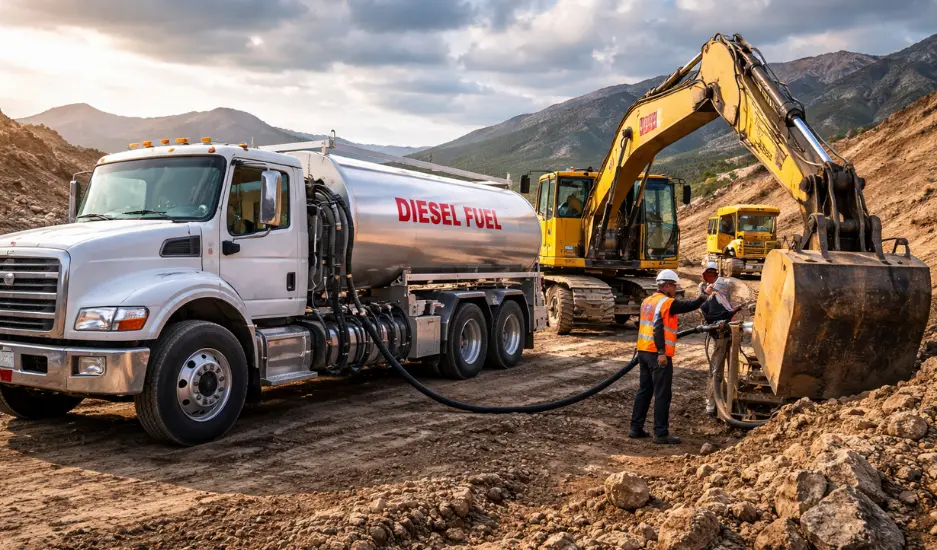
Remote construction fuel delivery ensures a steady fuel supply at isolated job sites without relying on public fuel stations. It reduces downtime, supports heavy equipment operations, improves scheduling, and lowers labor costs. Contractors use on-site fueling, mobile refueling, and scheduled deliveries to maintain productivity and avoid costly interruptions in remote environments.
Remote construction projects depend on reliable fuel logistics. Construction fuel delivery brings diesel and DEF directly to the job site, removing the need for off-site fueling trips. This approach improves uptime, supports heavy equipment, and keeps projects on schedule.
The Unseen Challenges of Remote Construction Sites
Remote sites lack access to fuel stations. Crews operate in isolated terrain with limited infrastructure. Equipment must run continuously, yet fuel access remains uncertain.
Why Traditional Fueling Falls Short
Sending trucks to fuel stations wastes time and labor. It increases equipment idle time and creates scheduling gaps. Fuel availability also becomes unpredictable in rural areas.
The Role of Specialized Diesel Delivery
Mobile diesel delivery solves these issues. It supports on-site fueling, scheduled top-offs, and emergency refueling. Contractors maintain control over fuel supply and operations.
Understanding Remote Site Challenges
Access, Terrain, and Weather
Remote sites often sit in rough terrain. Roads may not support frequent fuel transport. Weather conditions can delay deliveries and disrupt fuel supply chains.
Downtime and Security Risks
Fuel shortages stop operations. Equipment downtime leads to missed deadlines. Fuel theft also increases in unsecured locations.
Impact on Costs and Timelines
Unplanned fuel trips increase labor costs. Delays affect project schedules. Poor fuel planning leads to budget overruns.
Fuel Delivery Solutions for Remote Construction
On-Site and Mobile Refueling
On-site fueling brings the fuel station directly to equipment. Wet hosing and direct-to-equipment delivery eliminate the need for operators to leave machines.
Mobile refueling supports:
- Heavy machinery
- Fleet vehicles
- Generators and standby power systems
Essential Fuel Products
Remote sites require a mix of fuel types:
- Ultra clean diesel
- Red-dyed diesel for off-road use
- Biodiesel blends
- Diesel Exhaust Fluid (DEF)
These products support compliance and equipment performance.
Flexible Delivery Models
Fuel providers offer different delivery options:
- Scheduled deliveries
- Keep-full tank monitoring
- Same-day or emergency fuel delivery
These models adapt to changing project needs and fuel consumption patterns.
Strategic Fuel Management
Preventing Run-Outs
Fuel shortages create major delays. Scheduled top-offs and monitoring systems ensure continuous supply. Contractors avoid last-minute emergencies.
On-Site Fuel Storage
Remote projects rely on bulk tanks and portable tanks. Options include:
- Skid tanks
- On-site storage tanks
- Tank rentals
Proper storage ensures fuel availability and reduces delivery frequency.
Managing Risk and Consumption
Fuel tracking tools monitor usage. Teams identify inefficiencies and control costs. Secure storage reduces theft risk and improves accountability.
Fuel Delivery Options Comparison
| Delivery Type | Best Use Case | Key Benefit |
| On-site fueling | Active job sites | Saves time and labor |
| Mobile refueling | Large equipment fleets | Continuous operations |
| Bulk fuel delivery | Long-term projects | Lower cost per gallon |
| Emergency fuel delivery | Unexpected shortages | Prevents downtime |
| Scheduled deliveries | Predictable consumption patterns | Consistent fuel supply |
Leveraging Technology
Tracking and Reporting Systems
Modern fuel services use tracking tools to monitor fuel usage. Reports help fleet managers optimize consumption and reduce waste.
Remote Tank Monitoring
Sensors track fuel levels in real time. Automated alerts trigger deliveries before tanks run low. This reduces manual checks and improves efficiency.
Safety, Compliance, and Sustainability
Safe Fuel Handling
Remote fueling requires strict safety practices:
- Proper grounding procedures
- Spill prevention measures
- Trained operators
These steps reduce environmental and operational risks.
Regulatory Compliance
Projects must meet environmental and fuel handling regulations. Compliance includes proper storage, reporting, and emissions standards.
Sustainable Fuel Options
Many contractors now use biodiesel blends and renewable diesel. These options reduce emissions while maintaining performance.
Choosing the Right Fuel Delivery Partner
Remote Logistics Expertise
Not all providers handle remote sites well. Experience in difficult terrain and weather conditions matters.
Service Coverage and Flexibility
Look for providers that offer:
- Mobile diesel delivery
- DEF delivery
- Emergency response
- Fleet fueling services
Reliability and Preparedness
A reliable provider ensures consistent supply. Emergency readiness helps avoid costly delays.
When Remote Fuel Delivery Makes Sense
Remote fuel delivery works best when:
- Job sites are far from fuel stations
- Equipment runs continuously
- Projects require strict timelines
- Fuel consumption is high and predictable
It supports both short-term and long-term construction projects.
Pros and Cons
Pros:
- Reduces downtime
- Saves labor and travel time
- Improves fuel management
- Supports continuous operations
- Enhances safety and compliance
Cons:
- Requires upfront planning
- Needs proper on-site storage
- Depends on reliable delivery schedules
Common Mistakes to Avoid
- Ignoring fuel consumption trends
- Underestimating storage needs
- Relying only on emergency deliveries
- Poor security for fuel tanks
- Lack of fuel tracking systems
Key Takeaways
- Remote sites need structured fuel logistics
- On-site fueling improves uptime and efficiency
- Storage and monitoring prevent shortages
- Technology enhances fuel management
- Reliable delivery partners reduce operational risk
Conclusion
Remote projects depend on efficient fuel logistics. Construction fuel delivery supports uptime, reduces delays, and improves cost control. Contractors who plan fuel supply carefully avoid disruptions and keep operations running smoothly.
FAQs
It supplies diesel and DEF directly to job sites without requiring off-site fueling trips.
It eliminates travel to fuel stations and keeps equipment running continuously.
Diesel, red-dyed diesel, biodiesel blends, and DEF are commonly used.
Yes, but it works best as backup, not the primary fueling strategy.
Yes, on-site tanks ensure steady fuel supply and reduce delivery frequency.

2 Responses
https://shorturl.fm/9lBAb