Introduction
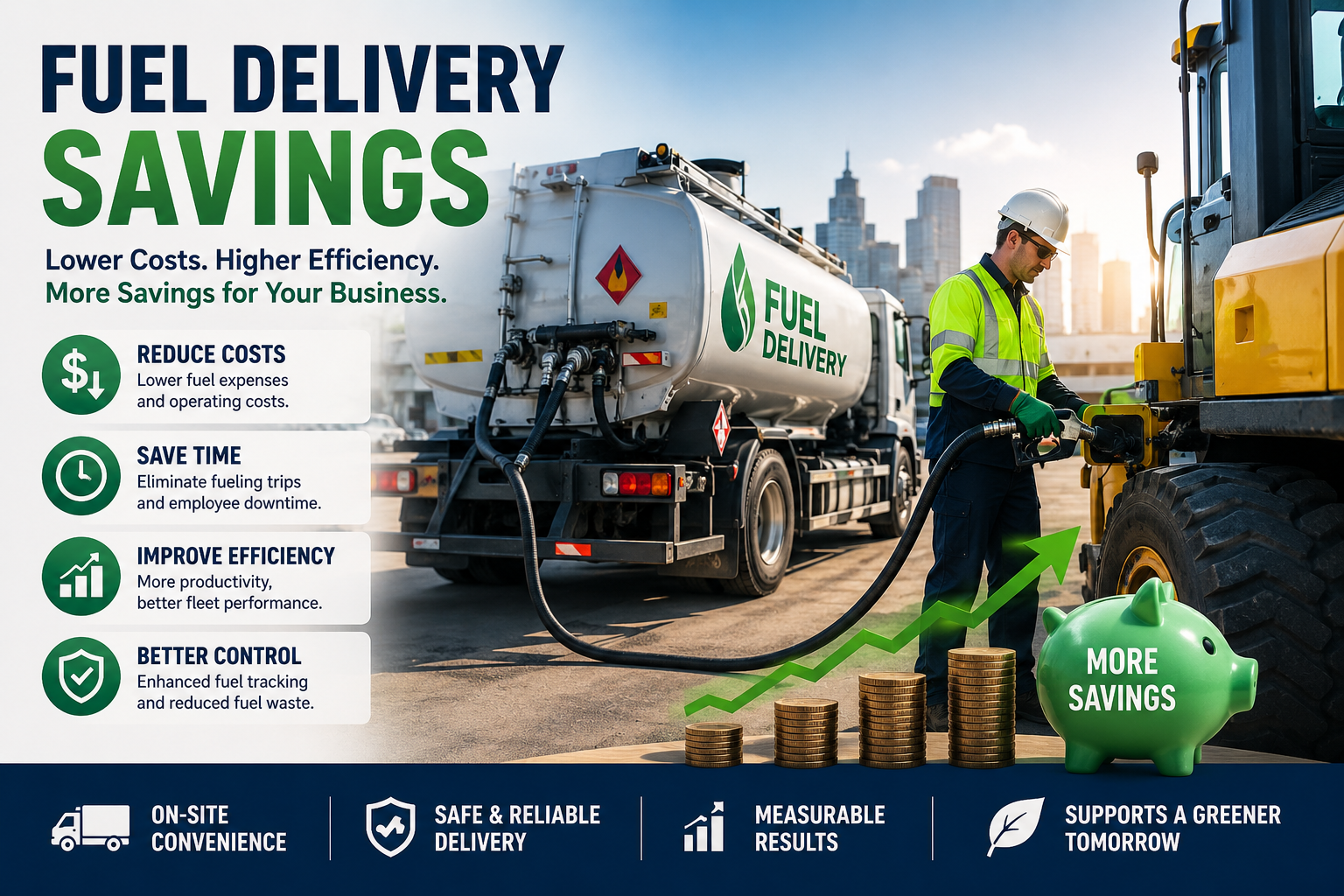
Fuel delivery savings can significantly reduce operating costs for businesses that rely on fleets, equipment, or frequent fuel purchases. By eliminating unnecessary trips to fuel stations, reducing labor downtime, and improving fuel management, companies can achieve measurable cost savings while increasing productivity.
For many businesses, fuel expenses represent one of the largest operational costs. Whether you manage construction equipment, delivery vehicles, or service fleets, finding ways to lower fuel spending directly impacts profitability. Could on-site fuel delivery be the cost-saving solution your business has been looking for?
Quick Summary
Fuel delivery savings come from reducing labor costs, vehicle downtime, fuel theft, and unnecessary mileage. Businesses that switch to scheduled fuel delivery often improve operational efficiency while gaining better fuel visibility and control. For companies managing multiple vehicles or equipment, mobile fueling can create both immediate and long-term cost benefits.
What Are Fuel Delivery Savings?
Fuel delivery savings refer to the reduction in operational expenses achieved when fuel is delivered directly to your vehicles, equipment, or job site instead of requiring employees to visit fuel stations.
Common savings include:
- Reduced employee downtime
- Lower labor expenses
- Less vehicle wear and tear
- Improved route efficiency
- Better fuel inventory management
Businesses often discover that indirect savings exceed the actual fuel cost difference.
How Does Mobile Fueling Reduce Costs?
Mobile fueling reduces costs by eliminating non-productive time spent driving to fuel stations and waiting in line. When vehicles are fueled during off-hours, your team can begin work immediately instead of making fuel stops.
Key Cost Reduction Areas
- Increased employee productivity
- Reduced overtime expenses
- Lower fuel station travel mileage
- Improved fleet utilization
- Reduced administrative workload
For example, a regional fleet operating throughout US may save dozens of labor hours each month simply by eliminating routine fueling trips.
Why Do Businesses Choose Fuel Delivery?
Businesses choose fuel delivery because it offers convenience, operational efficiency, and better fuel management. The ability to fuel assets directly at a job site minimizes disruptions and allows teams to focus on revenue-generating activities.
Major Business Benefits
- Predictable fuel scheduling
- Centralized fuel tracking
- Reduced risk of fuel theft
- Improved compliance reporting
- Better budgeting and forecasting
These advantages make fuel delivery particularly attractive for construction, transportation, agriculture, and logistics companies.
What Hidden Costs Can Fuel Delivery Eliminate?
Many organizations focus only on fuel prices while overlooking the hidden expenses associated with traditional fueling methods.
Hidden Costs Often Overlooked
- Employee travel time
- Fuel card misuse
- Vehicle depreciation from extra mileage
- Administrative reconciliation
- Delayed project schedules
By addressing these indirect costs, businesses frequently discover substantial fuel delivery savings beyond the pump price alone.
How Can You Calculate Fuel Delivery Savings?
The best way to calculate fuel delivery savings is to compare your current fueling expenses against the total cost of on-site fuel delivery, including labor and productivity impacts.
Step 1: Measure Current Fueling Costs
- Track employee fueling time.
- Calculate labor costs during fueling trips.
- Measure additional vehicle mileage.
- Record fuel management expenses.
Step 2: Compare With Delivery Costs
- Obtain fuel delivery pricing.
- Estimate productivity gains.
- Factor in reduced mileage.
- Calculate annual savings potential.
Many businesses are surprised to find that labor savings alone justify the switch.
What Are Best Practices For Maximizing Savings?
Businesses achieve the greatest fuel delivery savings when they combine delivery services with strong fuel management practices.
Recommended Best Practices
- Schedule regular fuel deliveries
- Monitor fuel consumption trends
- Use fleet telematics systems
- Audit fuel usage regularly
- Maintain accurate fuel records
Consistent monitoring helps identify inefficiencies before they become costly problems.
How Does Fuel Delivery Improve Fleet Efficiency?
Fuel delivery improves fleet efficiency by ensuring vehicles are ready to operate at the start of each workday. Drivers spend less time refueling and more time serving customers or completing scheduled tasks.
Efficient fueling also supports route optimization, reduces idle time, and improves overall asset utilization. Over time, these operational improvements contribute directly to stronger business performance and lower operating costs.
Pro Tips For Better Fuel Management
Practical Tips
- Review fuel usage reports monthly.
- Establish fuel consumption benchmarks.
- Choose a reliable fuel delivery provider.
- Train employees on fuel accountability.
- Use digital fuel tracking tools.
These strategies help maximize both operational efficiency and long-term fuel savings.
Frequently Asked Questions
Not always on a per-gallon basis. However, when labor, productivity, mileage, and administrative costs are included, many businesses achieve meaningful overall savings.
Savings vary by fleet size, fuel usage, and operational requirements. Companies with frequent fueling needs often experience the largest benefits.
Yes. Vehicles can be fueled during off-hours, allowing employees to start work immediately instead of visiting fuel stations.
Yes. Modern fuel delivery services often include monitoring, reporting, and controlled fueling processes that improve accountability.
Construction, logistics, transportation, agriculture, municipal services, and field service operations commonly benefit from mobile fueling solutions.
It can be. Consolidated fuel deliveries may reduce unnecessary vehicle trips and lower overall fuel consumption related to fueling activities.
Final Thoughts
Fuel delivery savings extend far beyond the price of fuel itself. By reducing downtime, improving operational efficiency, and strengthening fuel management practices, businesses can lower costs while increasing productivity. For organizations seeking a competitive advantage, evaluating fuel delivery as part of a broader cost-control strategy is a practical and potentially high-impact decision.