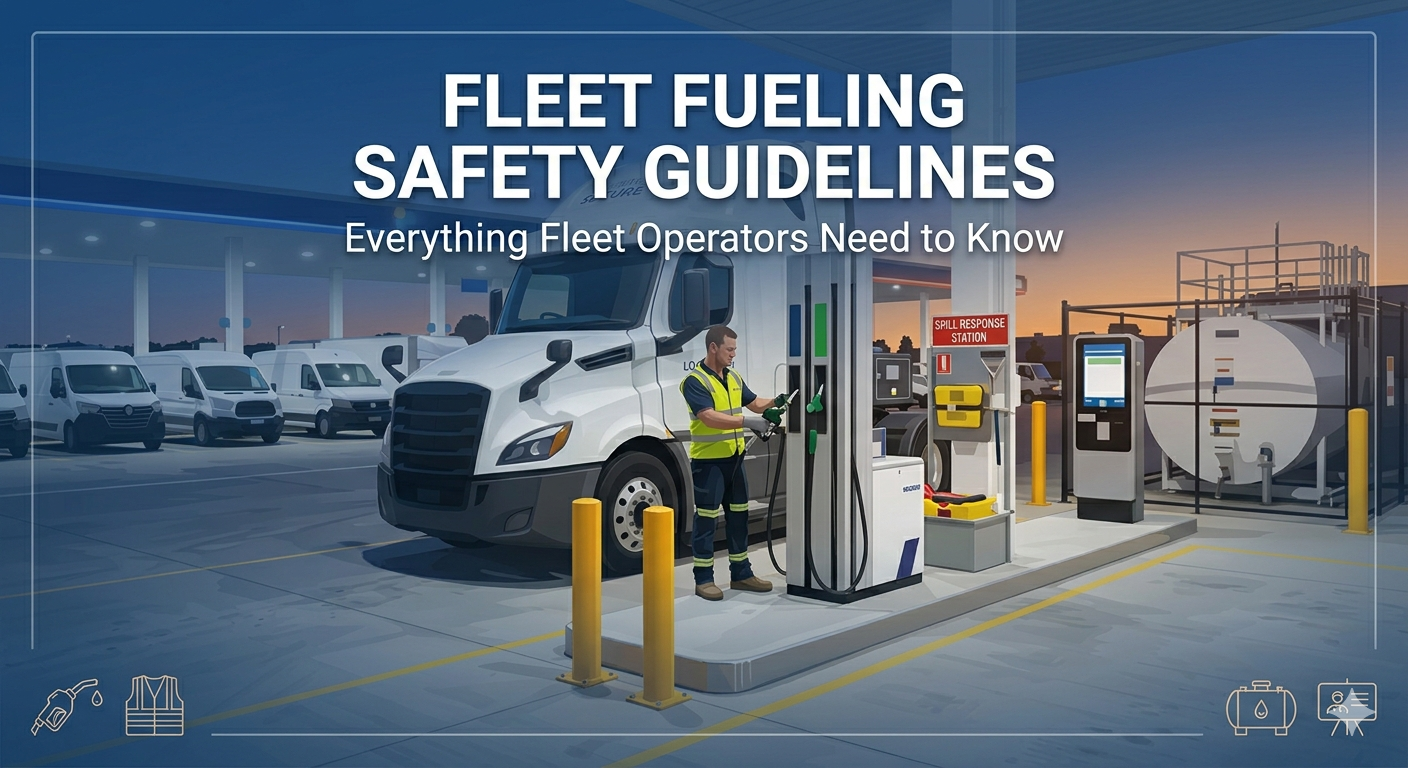
Managing a fleet comes with serious responsibilities , and fueling is one of the most critical. Fleet Fueling Safety Guidelines exist to protect drivers, vehicles, the environment, and business operations from preventable accidents and costly disruptions.
In this article, readers will discover practical safety tips, best practices for on-site and off-site fueling, how to prevent fuel spills, the importance of driver safety training, and how a solid fuel management system can keep commercial fleets running smoothly and safely every single day.
Introduction
Managing a commercial fleet is no small task, and fueling operations sit right at the heart of keeping everything moving. Whether a fleet consists of ten delivery vans or hundreds of long-haul trucks, the way fueling is handled has a direct impact on driver safety, vehicle performance, environmental compliance, and overall business continuity.
Fleet Fueling Safety Guidelines are not just a box to tick, they are a living, breathing framework that protects people, assets, and operations from serious harm. This guide walks fleet managers, drivers, and business owners through everything they need to know: from everyday Fleet Fueling Safety Tips to emergency preparedness, fuel spill prevention, and the role of modern technology in streamlining Fleet Operations.
Why Fleet Fueling Safety Matters
The fueling process might seem routine, but it carries real risks. Fuel is flammable, spills happen, and human error is always a factor. According to industry data, a significant proportion of fuel-related incidents occur not during transport but during the actual fueling process itself at depots, on roadsides, or at third-party fuel stations.
For businesses that rely on Commercial Fleet Fueling, a single serious incident can lead to vehicle downtime, environmental fines, legal liability, and reputational damage. On a broader scale, poor fueling practices erode Fuel Efficiency, drive up operational costs, and put drivers at unnecessary risk.
That is precisely why clear, actionable Fleet Fueling Safety guidelines are not optional they are essential.
Core Fleet Fueling Safety Tips Every Operator Should Follow
Implementing the right Fleet Fueling Safety Tips from day one sets the foundation for a safer, more efficient operation. Here are the non-negotiables that every fleet should have in place.
1. Never Fuel Near Open Flames or Heat Sources
Fuel vapours are highly flammable and can ignite well before liquid fuel does. All fueling whether On-Site Fueling or Off-Site Fueling must take place away from open flames, running engines where possible, and any equipment that generates sparks or heat.
2. Always Ground the Vehicle Before Fueling
Static electricity is a surprisingly common cause of fuel fires. Before beginning any Direct-to-Truck Fueling process, drivers and fueling personnel should ensure the vehicle is properly grounded to prevent static discharge.
3. Use the Right Fuel for the Right Vehicle
Misfuelling putting the wrong fuel type into a vehicle causes serious engine damage and can create unexpected fire hazards. Clear labelling at fueling points, combined with vehicle-specific fuel cards in a Fuel Management System, virtually eliminates this risk.
4. Never Leave a Fueling Vehicle Unattended
A vehicle being fueled should always be supervised. Overfilling, hose disconnections, and equipment malfunctions can happen quickly, and an unattended nozzle can turn a minor issue into a major Fuel Spill Prevention failure.
5. Keep Fire Extinguishers Accessible at All Times
Every fueling location whether a fixed depot or a mobile fueling point should have appropriate fire suppression equipment within immediate reach and regularly inspected as part of routine Vehicle Maintenance.
On-Site vs. Off-Site Fueling: Key Safety Differences
Fleet operators typically manage fueling through one of two broad approaches: On-Site Fueling or Off-Site Fueling. Each has its own safety profile and requirements.
On-Site Fueling
On-Site Fueling involves fueling vehicles at a dedicated company facility, often via fixed fuel storage tanks or a mobile fueling unit on the premises. This approach gives fleet managers the greatest level of control over fueling procedures, safety protocols, and fuel usage tracking.
Benefits include:
- Greater oversight of driver behaviour during fueling
- Integration with a Fuel Management System for accurate consumption tracking
- Reduced exposure to third-party fueling station risks
- Lower per-litre costs through Bulk Fuel Delivery agreements
Safety priorities for on-site operations include proper tank maintenance, bunded storage areas to contain spills, regular inspection of fueling equipment, and clearly marked emergency shut-off points.
Off-Site Fueling
Off-Site Fueling takes place at public or commercial fuel stations and is common for long-distance routes or drivers operating far from a home depot. While convenient, it introduces variables that on-site operations do not have different equipment standards, unfamiliar layouts, and less oversight.
Fleet operators should ensure drivers receive specific Driver Safety Training covering off-site fueling hazards, including how to identify faulty nozzles, how to handle spills away from the depot, and who to contact in an emergency.
Bulk Fuel Delivery: Safety Considerations for Large-Scale Operations
Many commercial fleets rely on Bulk Fuel Delivery to keep their on-site tanks topped up. While this reduces the frequency of fueling events, each delivery carries its own set of safety requirements.
Receiving a Bulk Delivery Safely
- Ensure the delivery area is clear of vehicles and personnel not involved in the transfer.
- Verify the product being delivered matches the tank’s designated fuel type.
- Check that the delivery hose is properly connected and that overflow prevention devices are functioning.
- Keep a spill kit immediately available throughout the delivery.
- Record the quantity delivered and compare it against Fuel Management System data to identify any discrepancies.
Bulk deliveries should be conducted by trained and certified fuel delivery personnel, and fleet managers should request proof of training and compliance from all Commercial Fuel Delivery suppliers they work with.
Direct-to-Truck Fueling: Efficiency with Responsibility
Direct-to-Truck Fueling where a fuel tanker comes directly to vehicles in the field or at a depot and fuels them without the driver needing to travel to a fuel station is a growing solution for large fleets looking to save time and reduce off-route mileage.
This method improves Fuel Efficiency and supports better Fleet Operations scheduling, but it also demands strict safety procedures. Key points include:
- Vehicles must be parked on stable, level ground during fueling.
- Engines should be switched off unless the fuel provider specifies otherwise.
- All fueling personnel must wear appropriate personal protective equipment (PPE).
- Drivers should remain available but at a safe distance unless assisting under supervision.
When managed correctly, Direct-to-Truck Fueling is one of the safest and most cost-effective approaches to commercial fleet fueling.
Fuel Spill Prevention: Protecting People and the Environment
Fuel Spill Prevention is one of the most important pillars of any Fleet Fueling Safety framework. Fuel spills are not only a fire and safety hazard they are an environmental liability that can result in significant regulatory fines and cleanup costs.
Practical Spill Prevention Measures
- Use drip trays and drip mats at all fixed fueling points to capture minor leaks before they spread.
- Inspect hoses, nozzles, and couplings regularly as part of scheduled Vehicle Maintenance routines.
- Install automatic shut-off nozzles at all on-site fueling points to prevent overfilling.
- Maintain a well-stocked spill kit at every fueling location, including absorbent materials, containment booms, and disposal bags.
- Train all relevant staff in immediate spill response procedures so that containment begins within seconds of an incident.
What to Do When a Spill Occurs
Despite best efforts, spills do happen. When they do, a clear and rehearsed response plan makes all the difference. Drivers and fueling personnel should:
- Stop the flow of fuel immediately.
- Prevent the spill from reaching drains or watercourses.
- Deploy spill kit materials to contain and absorb the fuel.
- Report the incident to the fleet manager and, if required, to the relevant environmental authority.
- Document the incident thoroughly for internal records and regulatory purposes.
Driver Safety Training: The Human Element of Fleet Fueling Safety
No amount of equipment or technology can replace well-trained people. Driver Safety Training is the cornerstone of safe Fleet Fueling Safety practices, and it should be treated as an ongoing programme rather than a one-time induction exercise.
What Effective Driver Safety Training Should Cover
- Correct fueling procedures for both On-Site Fueling and Off-Site Fueling scenarios
- Hazard identification at fueling points
- Fuel Spill Prevention and spill response
- Emergency shut-off procedures
- How to report near-misses and incidents
- Safe use of fuel cards and the Fuel Management System
- Recognising signs of fuel system faults during Vehicle Maintenance checks
Training should be delivered in accessible, practical formats and refreshed regularly particularly when fleet vehicles change, new fueling locations are introduced, or regulations are updated.
The ROI of Training
Investing in comprehensive Driver Safety Training is not just an ethical obligation it is a sound business decision. Trained drivers are less likely to cause incidents, less likely to misfuel, and more likely to catch early Vehicle Maintenance issues before they escalate. That translates directly into lower insurance costs, fewer breakdowns, and stronger business continuity.
Fuel Management System: The Technology Behind Safer, Smarter Fleets
A modern Fuel Management System is one of the most powerful tools available to fleet operators who want to improve both safety and efficiency. At its core, a Fuel Management System monitors and records every fuel transaction across the fleet, who fueled, what vehicle, how much, when, and where.
Safety Benefits of a Fuel Management System
- Misfuelling prevention: Smart nozzle technology and vehicle-specific access codes prevent the wrong fuel from entering the wrong vehicle.
- Anomaly detection: Unusual consumption patterns can flag potential fuel theft, leaking systems, or inefficient driving behaviour.
- Audit trails: Every fueling event is logged, supporting compliance with environmental and safety regulations.
- Integration with maintenance schedules: Some systems trigger Vehicle Maintenance alerts based on fuel consumption thresholds.
Fuel Efficiency and Cost Control
Beyond safety, a well-implemented Fuel Management System is one of the most effective ways to improve Fuel Efficiency across a commercial fleet. By identifying inefficient vehicles, routes, and driver behaviours, fleet managers can make data-driven decisions that reduce consumption and therefore cost without compromising service levels.
Vehicle Maintenance: The Overlooked Safety–Fueling Connection
Vehicle Maintenance and fueling safety are more closely linked than many fleet operators realise. A poorly maintained vehicle is not just an operational risk it is a fueling safety risk.
Maintenance Issues That Affect Fueling Safety
- Fuel system leaks: Cracked hoses, failing seals, and corroded tank components can cause leaks during and after fueling.
- Faulty fuel gauges: Inaccurate readings can lead to overfilling or unexpected fuel starvation on the road.
- Catalytic converter temperature: Hot exhaust components on poorly maintained vehicles can ignite spilled fuel.
- Electrical faults: Wiring issues near fuel lines or tanks create ignition risks during fueling.
Integrating regular Vehicle Maintenance checks into the Fleet Operations schedule and flagging fuel system components specifically ensures that the vehicles themselves never become the source of a fueling incident.
Emergency Fuel Delivery and Fleet Emergency Fueling
Even the most well-prepared fleet will occasionally face a situation where a vehicle runs out of fuel unexpectedly, a supply disruption occurs, or a large-scale operational emergency arises. That is where Emergency Fuel Delivery and Fleet Emergency Fueling services become critical.
What Is Emergency Fuel Delivery?
Emergency Fuel Delivery refers to rapid, on-demand fuel supply to vehicles or locations that cannot wait for standard delivery schedules. This might apply to a stranded driver, a depot running critically low due to a supplier delay, or a fleet responding to an urgent operational requirement.
Reputable Commercial Fuel Delivery providers offer 24/7 Fuel Services to ensure that fleets are never left stranded. These services are particularly valuable for fleets operating in industries where downtime is not an option, emergency services, logistics, healthcare transport, and utilities, for example.
Fleet Emergency Fueling Protocols
Fleet managers should establish clear Fleet Emergency Fueling protocols that include:
- A list of approved emergency fuel suppliers with 24/7 Fuel Services capabilities
- Clear escalation procedures for drivers who need Emergency Fuel Delivery in the field
- Pre-approved purchase authorisation to avoid delays in a genuine emergency
- Communication trees so that the right people are notified quickly
Having these protocols in place transforms a potential crisis into a manageable operational event.
Fuel Contingency Planning: Preparing for the Unexpected
Fuel Contingency Planning is the process of preparing for fuel supply disruptions before they happen. It is a vital component of Fleet Operations risk management and sits at the intersection of business continuity and safety.
What Should a Fuel Contingency Plan Include?
A robust Fuel Contingency Plan typically addresses:
- Minimum stock levels: Defining the lowest acceptable fuel level at on-site storage facilities before a resupply order is triggered.
- Alternative supplier agreements: Pre-negotiated arrangements with secondary Commercial Fuel Delivery providers to activate if the primary supplier cannot deliver.
- Emergency communication protocols: Clear instructions for drivers and managers on how to access Emergency Fuel Delivery or Fleet Emergency Fueling services.
- Priority vehicle lists: In a supply-constrained situation, which vehicles get fuel first? Critical Fleet Operations should be defined in advance.
- Regular plan reviews: Fuel Contingency Planning is not a one-time exercise. Plans should be reviewed at least annually, and after any significant supply incident.
Fuel Contingency Planning and Business Continuity
For many businesses, a fleet is their primary operational asset. A prolonged fuel disruption is not just an inconvenience; it can halt deliveries, damage customer relationships, and threaten the financial health of the business. Integrating Fuel Contingency Planning into the wider Business Continuity strategy ensures that fuel-related disruptions are managed with the same rigour as other operational risks.
24/7 Fuel Services: Keeping Fleets Moving Around the Clock
Modern Fleet Operations rarely operate on a standard nine-to-five schedule. Logistics companies run overnight. Emergency vehicles respond at any hour. Construction fleets start before dawn. For these operations, access to 24/7 Fuel Services is not a luxury it is a necessity.
Benefits of 24/7 Fuel Services
- No operational gaps: Fleets can refuel whenever it is most convenient or operationally necessary, not just during supplier business hours.
- Emergency responsiveness: When Emergency Fuel Delivery is needed at 2am, a 24/7 Fuel Services provider can respond.
- Reduced out-of-route mileage: With on-demand Commercial Fuel Delivery available at any hour, drivers spend less time detouring to fuel stations.
- Improved planning flexibility: Scheduling fueling outside peak hours reduces depot congestion and improves overall Fleet Operations efficiency.
When selecting a fuel services partner, fleet managers should confirm the provider’s actual 24/7 Fuel Services capability including holiday and weekend coverage and establish clear contact protocols in advance.
Commercial Fuel Delivery: Choosing the Right Partner
For fleets that rely on Commercial Fuel Delivery rather than (or in addition to) public fueling stations, choosing the right supplier is a safety decision as much as a commercial one.
What to Look for in a Commercial Fuel Delivery Provider
- Certified and trained delivery drivers: All delivery personnel should hold relevant fuel handling certifications.
- Modern, well-maintained tanker fleet: Equipment condition directly affects delivery safety.
- Clear spill response capabilities: The supplier should carry and deploy spill kits as standard.
- Flexible scheduling including 24/7 Fuel Services: Operational needs do not always align with business hours.
- Transparent pricing and accurate metering: Accurate delivery quantities protect against both overpayment and under-stocking.
- Compatibility with the fleet’s Fuel Management System: Data integration simplifies reconciliation and anomaly detection.
A strong supplier relationship also supports Fuel Contingency Planning, a trusted Commercial Fuel Delivery partner who understands the fleet’s operational profile can proactively flag supply risks before they become emergencies.
Integrating Fleet Fueling Safety Into Business Continuity
The strongest fleets treat Fleet Fueling Safety not as a standalone operational procedure but as a core pillar of their Business Continuity strategy. When fueling safety, Vehicle Maintenance, Driver Safety Training, Fuel Management System data, and Fuel Contingency Planning all feed into a unified risk framework, the result is an operation that is resilient, compliant, and efficient.
Building a Safety-First Fueling Culture
Culture matters. Policies and procedures are only as effective as the people who follow them. Fleet managers who visibly prioritise Fleet Fueling Safety through regular training, open incident reporting, and recognition of safe behaviour build teams that take safety seriously at every fueling event, whether at the depot or 200 miles from home.
Key cultural markers of a safety-first fueling operation include:
- No-blame incident reporting that encourages near-miss disclosure
- Regular safety briefings that incorporate real-world Fleet Fueling Safety Tips
- Leadership that models safe fueling behaviour and holds all team members to the same standard
- Continuous improvement loops that turn incidents and near-misses into better procedures
Conclusion
Fleet Fueling Safety is a multidimensional discipline that touches every corner of fleet management, from the individual driver at the pump to the boardroom where Business Continuity strategy is set. The guidelines explored in this article are not theoretical ideals; they are practical, proven measures that fleets of every size can implement to reduce risk, improve Fuel Efficiency, protect the environment, and keep drivers safe.
Whether it is investing in a robust Fuel Management System, partnering with a reliable Commercial Fuel Delivery provider who offers 24/7 Fuel Services, building a comprehensive Fuel Contingency Plan, or simply ensuring that every driver completes thorough Driver Safety Training, every step taken toward better Fleet Fueling Safety is a step toward a stronger, more sustainable fleet operation.
The road ahead is always unpredictable, but with the right Fleet Fueling Safety Guidelines in place, the fueling process never has to be.