
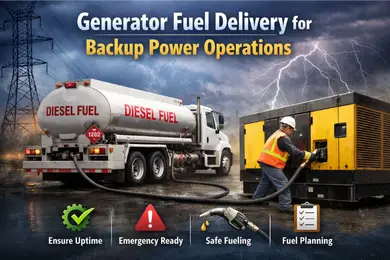
Generator fuel delivery helps businesses keep backup power systems ready without pulling staff into fuel runs, delaying operations, or risking outages during critical events. It supports uptime, emergency preparedness, safer fuel handling, and better fuel planning for facilities, jobsites, fleets, and industrial sites that rely on standby generators to stay operational.
Backup power only works when fuel is available at the right time. That is why generator fuel delivery matters for businesses that cannot afford downtime. It helps facilities, jobsites, yards, and industrial sites keep standby power systems fueled and tested. This way, they’re always ready.
For many businesses, the real issue is not generator ownership. The real issue is fuel logistics. A generator might be on-site, but bad fueling plans can still lead to power risks, wasted labor, and delays.
Why Backup Power Fuel Planning Matters
Generators protect operations during outages, grid instability, storms, planned maintenance, and peak-risk periods. They support refrigeration, communications, lighting, pumps, security systems, data infrastructure, and essential equipment.
Backup power plans can fail in two main ways: teams wait too long to refuel, or they rely on staff to fuel manually at the last moment.
That approach creates several problems
- Staff lose time on fuel runs
- Fuel levels become harder to track
- Emergency response becomes reactive
- Jobsite and yard operations get interrupted
- Safety and fueling control can weaken
A better plan sees generator fueling as key to uptime management, not just an afterthought.
What Generator Fuel Delivery Actually Solves
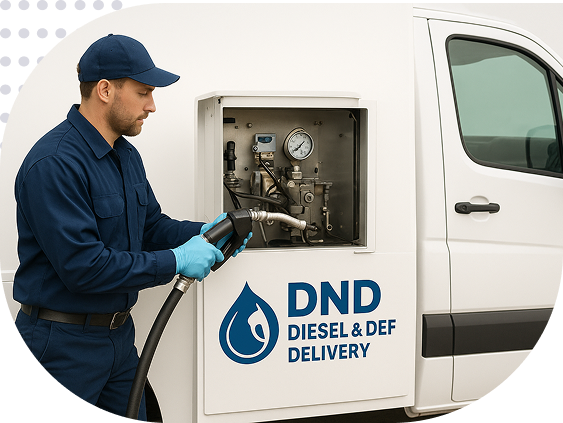
On-site fuel support reduces the operational burden of keeping backup systems ready. Businesses can avoid off-site trips or chaos during outages. They can schedule deliveries based on usage, risk, site conditions, or emergencies.
This works well for:
- warehouses and logistics hubs
- construction sites
- medical and care facilities
- telecom and utility support operations
- manufacturing plants
- commercial properties
- schools and public facilities
- temporary project locations
The service helps operations teams stay ready for power. It does this without extra labor, vehicle use, or scheduling issues.
When This Option Makes Sense
Generator fueling support is most logical when power loss directly impacts costs.
Best Fit for Businesses with Uptime Risk
This model fits sites that depend on backup power for:
- temperature-sensitive inventory
- security and access systems
- network continuity
- production lines
- pumps and water systems
- tenant or customer operations
- temporary power on remote projects
It makes sense for groups with many locations, few staff, or high emergency risks during bad weather and busy times.
How scheduled fueling improves reliability
Scheduled fueling gives operators more control than emergency-only fueling. It creates a repeatable process tied to expected usage, test cycles, seasonal risk, and site demand.
That helps teams:
- reduce last-minute service calls
- maintain more stable fuel levels
- improve readiness before storms or outages
- support planned maintenance windows
- keep labor focused on core work
Many businesses use scheduled support alongside broader diesel delivery service planning for equipment, tanks, fleets, and generators. That creates a more organized fueling system across the site.
Emergency delivery still plays a critical role
Even strong fuel planning cannot prevent every urgent situation. Storms, unexpected runtime, long outages, and site access issues can quickly change fuel demand.
In those cases, emergency generator fueling becomes essential. Fast on-site response can protect operations when generator hours spike and existing supply runs low.
This is especially relevant for:
- facilities with critical loads
- sites in disaster-prone areas
- remote operations with limited local access
- properties running generators longer than expected
- projects with temporary power demands
Emergency support works best when it complements a broader operating plan, not when it becomes the only plan.
Generator fueling and broader site logistics
Backup power fueling rarely exists in isolation. Many sites manage diesel use across generators, equipment, fleet assets, and storage tanks at the same time.
That creates an opportunity to simplify site logistics through coordinated mobile diesel delivery. Instead of managing several disconnected fuel tasks, operators can align generator fueling with broader on-site fuel needs.
For example, a jobsite may need:
- standby generator refueling
- equipment fueling
- fleet fueling in the yard
- DEF replenishment for diesel units
- long-term fuel planning across project phases
When fueling is coordinated, teams gain better scheduling, lower disruption, and more predictable equipment availability.
Table: Common backup power fueling scenarios
| Scenario | Fueling need | Operational priority | Best approach |
| Daily standby readiness | Maintain safe fuel level | Preparedness | Scheduled top-offs |
| Storm preparation | Fill before grid risk rises | Uptime | Pre-event delivery |
| Extended outage | Refill during active runtime | Continuity | Emergency response |
| Remote jobsite power | Support temporary generator use | Productivity | On-site scheduled fueling |
| Multi-site operations | Standardize fuel planning | Control | Centralized fuel scheduling |
Pros and Cons
Pros
- Supports uptime without pulling staff off core tasks
- Improves emergency readiness
- Reduces manual fuel handling and unplanned trips
- Helps sites plan around runtime and demand
- Fits well with fleet fueling and jobsite operations
Cons
- Needs clear site access and communication
- Works best with accurate fuel tracking
- Emergency-only use may cost more than planned service
- Poor scheduling can still create preventable gaps
Common mistakes to avoid
Treating backup fuel like a last-minute task
Many businesses wait until a storm warning, low tank alert, or outage to think about fuel. That increases response pressure and raises operational risk.
Ignoring generator runtime estimates
Fuel planning should reflect actual generator size, load, and expected runtime. Rough guesses can lead to under planning.
Leaving fuel runs to internal staff
This may look simple, but it often wastes labor and creates inconsistency. It can also distract teams during critical events.
Forgetting related diesel and DEF needs
Sites that operate diesel fleets or equipment often miss the value of linking generator fueling with fleet fueling services or DEF delivery planning.
Using emergency service as the whole strategy
Emergency support matters, but it should back up a working fueling plan, not replace one.
Compliance, safety, and operational control
Fueling backup systems involves more than delivery timing. Businesses also need good site access, proper tank awareness, safe fueling procedures, and clean coordination between operations teams and fuel providers.
A dependable plan should account for:
- site entry rules
- fueling windows
- tank location access
- generator type and capacity
- contamination prevention
- outage communication flow
- fuel usage monitoring
For industrial sites and long-running projects, this level of coordination often connects naturally with long-term project support and broader on-site fuel logistics.
How to evaluate a fueling setup
A useful backup power fueling plan should answer a few basic questions:
Do you know how long each generator can run?
If not, your team cannot plan fuel timing accurately.
Do you track critical fuel thresholds?
Clear refill triggers reduce guesswork.
Can your site handle both planned and urgent fueling?
A good setup supports both normal readiness and emergency response.
Are generator, fleet, and equipment fuel needs managed together?
If not, your operation may be creating avoidable extra trips and labor.
Is fueling helping uptime or just reacting to problems?
The goal is operational control, not constant recovery.
Key Takeaways
- Generator fueling is an uptime issue, not just a fuel issue.
- Scheduled service improves readiness and reduces labor waste.
- Emergency delivery matters most when paired with a real plan.
- Coordinated on-site fueling can simplify broader site operations.
- Backup power reliability depends on fuel logistics as much as equipment readiness.
FAQs
Schedule refueling based on tank size, test cycles, outage risk, and runtime needs, not on guesswork alone.
No. Many businesses use scheduled deliveries to maintain readiness and avoid last-minute fueling issues.
Yes. Combined on-site fueling often improves efficiency, scheduling, and labor use across the site.
Yes. Reliable fuel access helps generators stay ready and reduces outage-related operational disruption.
Facilities, jobsites, yards, and industrial operators with uptime risk benefit most from on-site fueling support.
Conclusion
Generator fuel delivery helps businesses protect backup power readiness with less disruption, better planning, and stronger operational control. For sites that depend on standby power, fuel logistics directly affect uptime. The best approach combines scheduled support, emergency readiness, and coordinated on-site fueling so power systems stay available when the business needs them most.

2 Responses
https://shorturl.fm/hKLdI