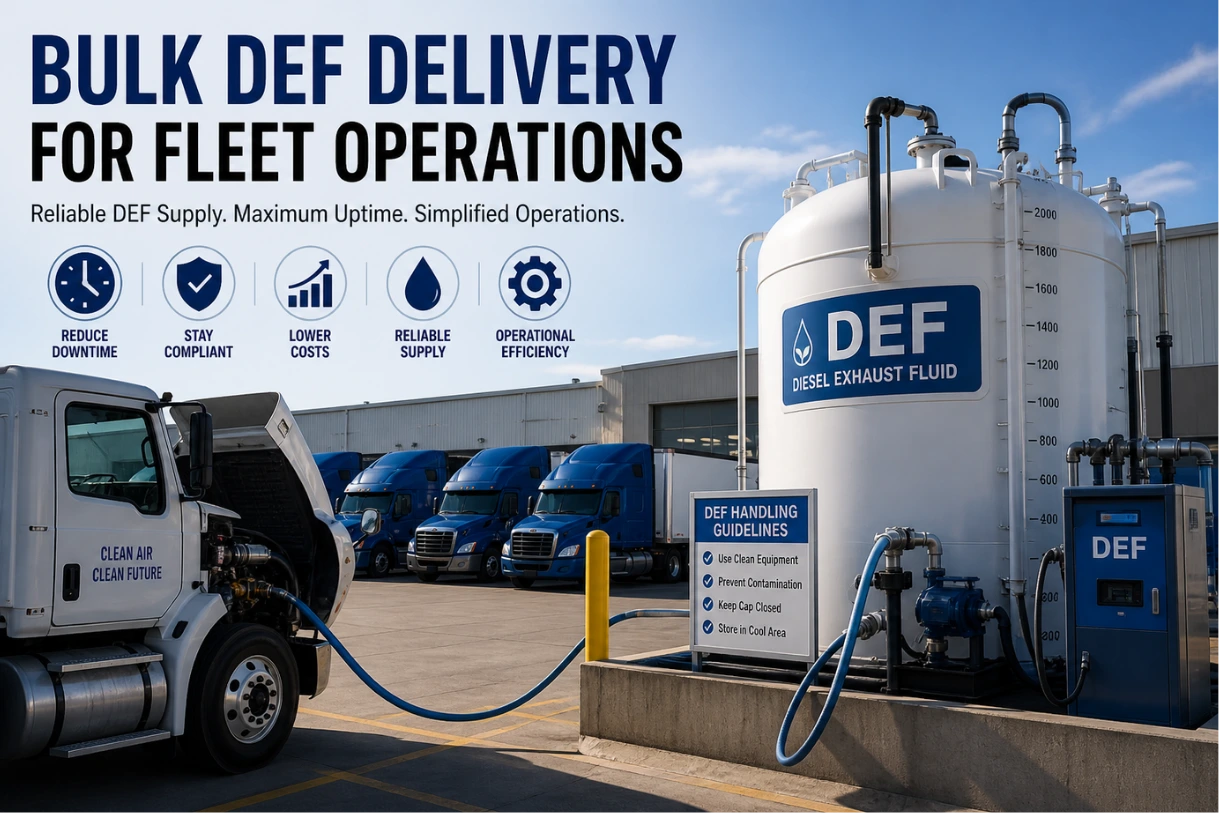
Bulk DEF delivery provides fleets with a reliable, on-site supply of diesel exhaust fluid to support SCR systems. It reduces downtime, improves compliance, and simplifies logistics. Fleet operators benefit from scheduled deliveries, better cost control, and fewer manual handling tasks, which help maintain uptime and streamline fueling operations across yards, routes, and job sites.
Bulk DEF Delivery for Fleet Operations
Bulk DEF delivery supports fleets that depend on consistent emissions control and uptime. It ensures diesel exhaust fluid stays available for trucks, equipment, and generators without relying on retail purchases or manual handling.
Fleets across the United States use DEF as part of SCR systems to meet emissions standards. When supply runs low, operations slow down. Bulk delivery solves this problem by bringing DEF directly to the yard or job site on a predictable schedule.
Why DEF Supply Matters for Fleet Uptime
DEF keeps modern diesel engines compliant and operational. Without it, many vehicles reduce power or stop running.
Fleet managers need a steady supply to avoid disruptions. Manual DEF handling creates delays, tracking issues, and inconsistent availability.
Bulk DEF delivery removes these risks. It aligns supply with usage and keeps operations moving without interruption.
How Bulk DEF Delivery Works
Providers deliver DEF in large volumes directly to storage tanks or containers at your location. Deliveries follow a schedule or respond to demand levels.
This approach supports:
- Centralized fueling yards
- Distributed fleet operations
- Construction and job sites
- Generator-powered facilities
It also integrates with broader fueling strategies, including diesel delivery service and fleet fueling operations.
Key Benefits for Logistics Fleets
- Reduced Downtime
Drivers and operators do not need to stop for DEF refills. Equipment stays in service longer.
- Better Cost Control
Bulk purchasing often reduces per-gallon costs. It also lowers labor expenses tied to handling smaller containers.
- Simplified Inventory Management
On-site storage allows teams to monitor usage and plan refills. Some providers offer tracking and reporting.
- Improved Compliance
Consistent DEF supply helps fleets meet emissions requirements without risk of penalties or system shutdowns.
- Safer Handling
Bulk systems reduce exposure to spills and contamination compared to manual pouring.
Bulk vs Packaged DEF Supply
| Factor | Bulk DEF Delivery | Packaged DEF (Jugs/Drums) |
| Cost per gallon | Lower | Higher |
| Labor required | Minimal | High |
| Storage efficiency | High | Limited |
| Risk of spills | Low | Higher |
| Scalability | Strong | Limited |
| Supply reliability | Consistent | Variable |
Integration with Fleet Fueling Operations
Bulk DEF delivery works best when paired with structured fueling systems. Many fleets combine DEF supply with:
- Mobile diesel delivery
- On-site fleet fueling services
- Yard fueling management
- Generator fueling support
This integrated approach improves scheduling and reduces operational friction. It also supports long-term project sites where fuel and DEF demand remain high.
When Bulk DEF Delivery Makes Sense
Bulk delivery fits operations that rely on consistency and scale.
Best fit scenarios include:
- Fleets with 20 or more diesel vehicles
- High-mileage logistics operations
- Construction fleets with heavy equipment
- Distribution yards with daily fueling cycles
- Facilities using standby generators
Smaller fleets may still benefit, but the value increases with usage volume.
Storage and Handling Considerations
Bulk DEF requires proper storage to maintain quality.
Key points include:
- Use dedicated DEF tanks
- Protect from extreme temperatures
- Avoid contamination from diesel or debris
- Monitor tank levels regularly
Clean storage ensures DEF performs correctly in SCR systems.
Pros and Cons of Bulk DEF Delivery
Pros
- Lower cost per gallon
- Reduced labor and handling
- Consistent supply
- Improved uptime
- Better compliance support
Cons
- Requires storage infrastructure
- Needs monitoring systems
- Upfront setup cost
- Not ideal for very small fleets
Common Mistakes to Avoid
- Poor Storage Setup
Improper tanks or exposure to heat can degrade DEF quality.
- Lack of Usage Tracking
Without monitoring, fleets risk overstocking or running out.
- Mixing Supply Methods
Switching between bulk and packaged DEF can create inconsistency.
- Ignoring Delivery Scheduling
Irregular deliveries lead to shortages during peak demand.
- No Integration with Fueling Strategy
DEF supply should align with diesel delivery and fleet fueling systems.
Key Takeaways
- Bulk DEF delivery supports uptime and compliance
- It reduces labor and operational delays
- It works best for medium to large fleets
- Proper storage and tracking are essential
- Integration with fueling systems improves efficiency
Conclusion
Bulk DEF delivery helps fleets maintain uptime, control costs, and meet emissions standards. It removes the need for manual handling and supports consistent operations. For logistics fleets that rely on efficiency and scale, this approach provides a practical and reliable solution for managing DEF supply.
FAQs
It is the on-site supply of diesel exhaust fluid in large volumes to support fleet operations and emissions systems.
It reduces downtime, lowers costs, and ensures consistent DEF availability for SCR-equipped vehicles.
Yes. Bulk supply typically lowers per-gallon cost and reduces labor expenses.
Fleets use dedicated tanks designed to prevent contamination and maintain fluid quality.
Yes. DEF has a shelf life, so proper storage and rotation are important.