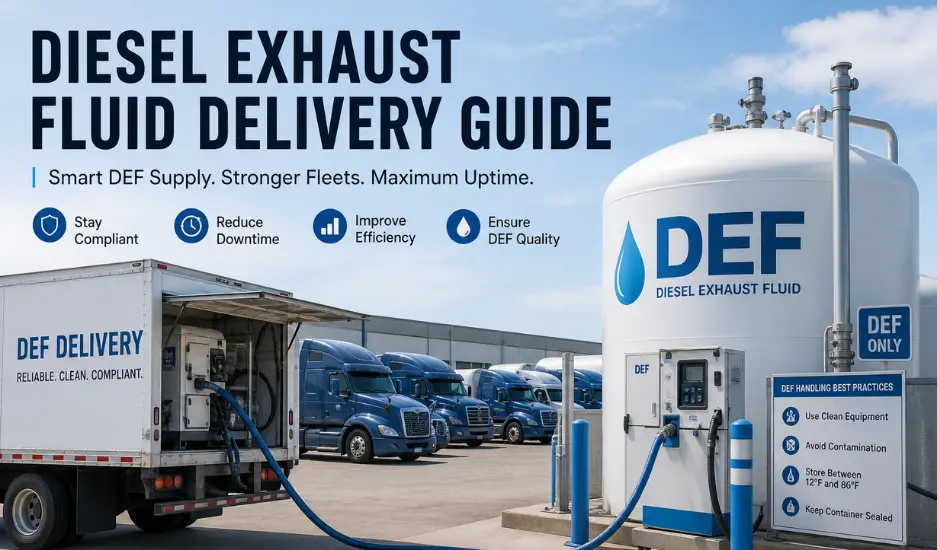
Diesel exhaust fluid delivery ensures fleets receive DEF on-site to keep SCR systems compliant and running. It reduces downtime, simplifies inventory control, and supports emission standards. Trucking companies use scheduled or on-demand delivery based on usage, storage capacity, and route demands. Proper handling, storage, and monitoring help prevent contamination and costly engine issues.
What DEF delivery actually solves
Diesel exhaust fluid delivery keeps trucks compliant with emission rules while reducing operational friction. Fleets need a steady DEF supply to run Selective Catalytic Reduction systems. Without it, trucks lose power or stop.
On-site delivery removes the need for drivers to stop for DEF. It also reduces handling errors and inventory gaps. For large fleets, this directly improves uptime and route reliability.
How DEF delivery works
Providers deliver DEF in bulk, totes, or packaged units. Fleets choose a model based on volume and storage.
Most trucking companies use scheduled deliveries. This matches usage patterns and avoids emergency refills. Some operations keep on-call support for unexpected demand spikes.
Mobile delivery trucks pump DEF directly into tanks, yard storage, or equipment. This reduces labor and handling time.
Types of DEF supply models
Bulk delivery
Best for large fleets with high consumption. Storage tanks stay on-site. Refill schedules depend on usage trends.
Tote delivery
Used by mid-size operations. Totes offer flexibility without full tank infrastructure.
Packaged DEF
Small fleets or remote operations use sealed containers. This option costs more per gallon and needs more handling.
Storage and handling basics
DEF requires clean, temperature-controlled storage. Contamination leads to system damage.
Keep DEF in sealed tanks or approved containers. Avoid dust, fuel contact, or exposure to sunlight.
Maintain storage between 12°F and 86°F. Extreme heat or freezing affects quality.
Use dedicated pumps and lines. Do not mix equipment used for diesel.
Diesel Exhaust Fluid Delivery Guide for Fleets
A structured approach improves reliability and cost control.
- Track DEF usage per vehicle
- Forecast weekly and monthly demand
- Match delivery schedule to consumption
- Maintain clean storage systems
- Train staff on handling procedures
This approach reduces emergency orders and protects equipment.
Operational impact on trucking companies
DEF delivery supports three core goals:
Uptime
Trucks stay on the road without unplanned stops.
Efficiency
Drivers focus on routes instead of refueling logistics.
Compliance
Fleets meet EPA emission standards without risk.
Cost considerations
DEF costs depend on delivery type, volume, and frequency.
Bulk delivery lowers cost per gallon. Packaged DEF increases cost due to handling and transport.
Labor also affects total cost. On-site delivery reduces manual handling and time loss.
Table: DEF Supply Options Comparison
| Supply Type | Best For | Cost Efficiency | Handling Effort | Storage Needs |
| Bulk Delivery | Large fleets | High | Low | Fixed tank required |
| Tote Delivery | Mid-size operations | Medium | Medium | Flexible space |
| Packaged DEF | Small or remote operations | Low | High | Minimal |
Pros and Cons of DEF delivery
Pros
- Reduces downtime
- Improves compliance reliability
- Lowers labor requirements
- Supports predictable operations
- Scales with fleet growth
Cons
- Requires storage setup for bulk
- Needs quality control practices
- Scheduling errors can disrupt supply
- Initial setup cost for tanks and systems
Common mistakes to avoid
Poor storage practices
Exposure to contaminants leads to system failure.
Irregular delivery planning
Inconsistent schedules create emergency refills and downtime.
Mixing equipment
Using diesel pumps for DEF causes contamination.
Ignoring usage data
Without tracking, fleets overstock or run out.
Lack of staff training
Improper handling leads to waste and equipment issues.
When DEF delivery makes sense
DEF delivery fits operations with:
- Large or growing trucking fleets
- Centralized yards or depots
- High route density
- Limited driver downtime tolerance
- Strict compliance requirements
It also works well for mixed operations that include generators or heavy equipment.
Role in broader fueling strategy
DEF delivery works best when integrated with fuel logistics.
Many fleets align DEF supply with fueling operations such as fleet fueling services or mobile diesel delivery. This creates a single, predictable supply chain.
Emergency coverage also matters. On-call support ensures operations continue during unexpected demand spikes.
Long-term projects, such as construction or infrastructure work, benefit from consistent supply planning across diesel and DEF.
Key Takeaways
- DEF delivery supports uptime and compliance
- Bulk delivery offers the best cost efficiency
- Clean storage prevents system damage
- Scheduled supply reduces operational risk
- Usage tracking improves planning accuracy
Conclusion
Diesel exhaust fluid delivery helps trucking companies maintain compliance, reduce downtime, and simplify operations. A structured delivery plan, proper storage, and usage tracking create reliable supply conditions. Fleets that treat DEF as part of their fuel strategy gain better control over cost, performance, and uptime.
FAQ
Most fleets schedule weekly or biweekly based on usage and storage capacity to avoid shortages.
Yes. Heat, sunlight, and contamination degrade DEF quality and can damage SCR systems.
Yes. Bulk delivery reduces cost per gallon and lowers handling expenses.
The engine reduces power or stops to meet emission rules, causing downtime.
Yes. DEF freezes at 12°F but remains usable after thawing if stored correctly.