For contractors, fuel is not just a supply item. It keeps schedules moving, crews productive, and heavy equipment running where and when it is needed. On busy jobsites, especially across Washington, delays in refueling can quickly turn into equipment downtime, labor waste, and schedule overruns. That is why more contractors are using onsite diesel fuel delivery instead of relying only on retail fueling or manual fuel hauling.
When diesel fuel arrives directly at the construction site, crews spend less time chasing fuel and more time getting work done. This guide explains how on-site fuel delivery works, where it adds the most value, and what contractors should compare when choosing a fuel delivery partner.
What is onsite diesel fuel delivery?
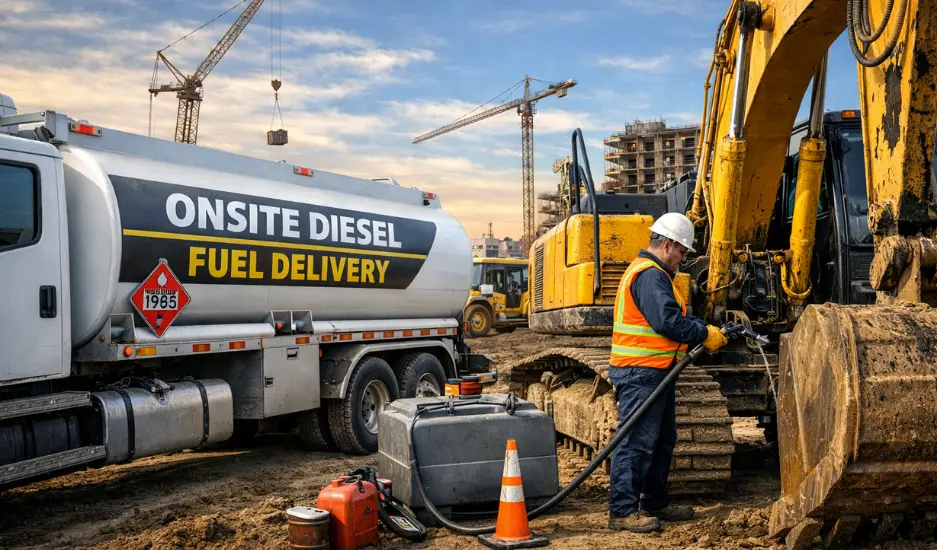
Onsite diesel fuel delivery is the scheduled or on-demand delivery of diesel fuel directly to construction equipment, on-site tanks, generators, or mobile tanks at a jobsite.
This service is often used for:
- Construction fuel delivery
- On-site fuel delivery
- Onsite fueling
- Refueling heavy equipment
- Generator fueling
- Same-day delivery
- Truck-to-truck resupplies
- Fuel tank fills for storage tanks, skid tanks, and trans cubes
For contractors, the core benefit is simple. Fuel comes to the work instead of forcing the work to stop for fuel.
Why do contractors use on-site fuel delivery?
Contractors use on-site fuel delivery to reduce downtime, improve jobsite efficiency, control fuel costs, and keep heavy machinery operating without unnecessary interruptions.
On a typical project, fueling delays do not only affect one machine. They can slow operators, support crews, delivery routes, and the entire production schedule. For remote construction sites, the problem gets bigger because fuel runs take longer and emergency resupply becomes harder to manage.
With onsite diesel fuel delivery, the fueling process becomes planned, repeatable, and easier to control.
The biggest benefits of onsite diesel fuel delivery
1. Less equipment downtime
This is the biggest reason contractors switch.
When excavators, loaders, bulldozers, rollers, pumps, or backup generators run low on fuel, work stops. Sending someone off-site to find diesel adds delay, labor cost, and often unnecessary idling. A dedicated fuel delivery partner helps keep heavy-duty construction equipment fueled where it operates.
For road construction, heavy construction, and multi-phase construction projects, that kind of consistency matters.
2. Better control over fuel costs
Fuel costs are not only about price per gallon. Contractors also pay for:
- Labor spent getting fuel
- Equipment downtime
- Off-route trips
- Unplanned same-day supply runs
- Fuel wastage from poor handling
- Project delays tied to missed fueling windows
A reliable fuel delivery model supports cost savings by making fuel use easier to plan, track, and audit.
3. Higher jobsite productivity
With on-site fuel delivery, machines can be fueled during shift changes, planned pauses, or overnight. That keeps operators focused on the job instead of handling fuel logistics.
This is especially useful for:
- Remote construction sites
- Residential contractors with multiple active jobs
- Landscaping businesses running equipment across several locations
- Construction companies managing both fleet fueling and equipment fueling
4. Better fuel logistics
Fueling is a logistics issue as much as a supply issue. Contractors need dependable delivery schedules, responsive service, and a provider that understands changing site conditions.
The right supplier can help with:
- Delivery routes
- Same-day delivery
- Recurring on-site tank fills
- Fuel logistics planning
- Emergency resupply after weather delays or power outages
5. Easier fuel management
As projects grow, fuel usage becomes harder to manage manually. That is where fuel management tools matter.
Modern fuel providers may support:
- Fuel tracking
- Fuel monitoring systems
- Remote fuel monitoring
- Remote tank monitoring
- Cellular monitors
- Usage reporting across sites and assets
For contractors managing multiple active jobs, these tools can improve accountability and reduce guesswork.
What fuel types are commonly used on construction sites?
Most contractors need more than one fuel solution depending on equipment and project type. Common options include:
- Diesel fuel
- Off-Road Diesel
- Dyed Diesel
- red diesel fuel
- Clear Diesel
- Renewable Diesel
- Biodiesel blends
- HVO renewable diesel
- Diesel Exhaust Fluid
- Fuel additives for cold weather or storage conditions
If your fleet includes on-road trucks and off-road equipment, your fuel plan may need separate handling and tracking for each category.
Washington also has an active Clean Fuel Standard. The Washington Department of Ecology states that the rule is designed to reduce the lifecycle greenhouse gas emissions of transportation fuels used in the state, and updated standards apply in 2026 and beyond. That makes renewable diesel more relevant for companies thinking about fuel strategy and environmental positioning in Washington.
How does on-site fuel delivery compare with traditional fueling?
| Factor | Traditional Fueling | On-Site Diesel Fuel Delivery |
| Equipment uptime | More interruptions | More consistent |
| Labor efficiency | Lower | Higher |
| Fuel records | Often scattered | Easier to centralize |
| Emergency response | Slower | More flexible |
| Remote construction sites | Harder to support | Better fit |
| Fuel monitoring | Limited | Easier to build into process |
For small jobs, manual fueling may still work. But for larger construction projects, the hidden cost of downtime and poor coordination usually outweighs the convenience of handling fuel ad hoc.
What storage options support on-site fueling?
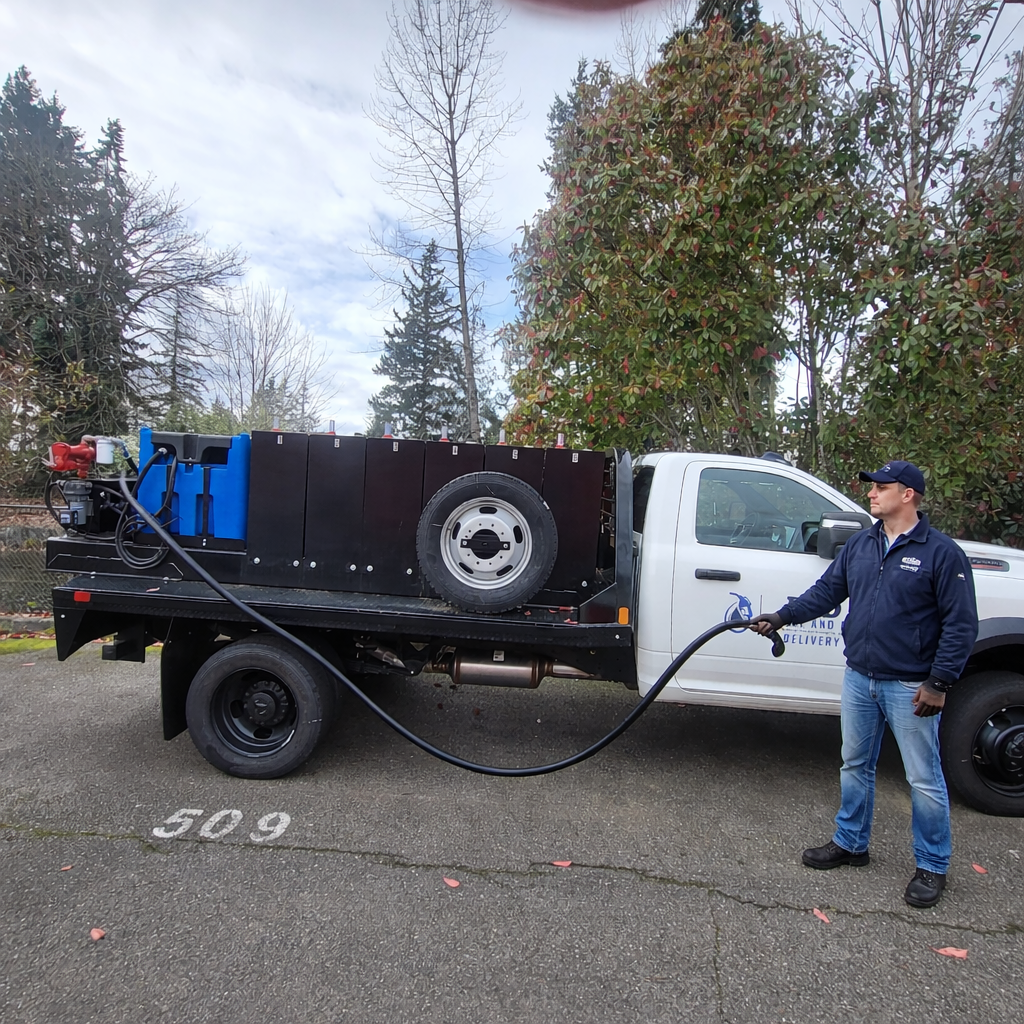
Contractors often pair onsite diesel fuel delivery with temporary or semi-permanent storage options such as:
- Fuel tanks
- Storage tanks
- Fuel storage tanks
- On-site tanks
- Onsite fuel tanks
- Skid tanks
- Mobile tanks
- Trans cubes
- Tank rentals
This setup gives crews a buffer between deliveries and makes it easier to support machines, generators, and other industrial equipment throughout the project.
Safety matters: what contractors should know
Fuel handling on a jobsite has real safety and compliance requirements.
OSHA’s construction standard for flammable liquids says flammable liquids must not be stored in exit routes or normal passage areas, and OSHA interpretation letters note that common grades of diesel fuel are treated as flammable liquids for construction storage purposes. OSHA also states that approved containers and portable tanks should be used for storage and handling.
That matters for contractors using mobile tanks, trans cubes, or temporary fuel storage.
A qualified fuel delivery partner should follow clear safety protocols around:
- Safe fueling zones
- Spill prevention
- Fuel spillage response
- Approved containers and tanks
- Site-specific handling procedures
- Contamination prevention
- Delivery documentation
Washington contractors should also pay attention to state safety rules. Washington L&I publishes construction safety standards that apply to jobsite operations and should be reviewed alongside federal requirements for site-specific compliance.
What about DEF and emissions equipment?
Many modern diesel machines and vehicles use Diesel Exhaust Fluid systems. EPA guidance says DEF systems are part of emissions compliance, and the agency has issued guidance encouraging manufacturers to reduce unnecessary derates and shutdown issues while maintaining emissions requirements.
For contractors, that means two things:
- DEF supply should be part of the fueling plan
- Fuel quality and DEF handling both matter for uptime
If you operate newer heavy machinery or on-road support trucks, ask your provider whether they support both diesel and DEF deliveries.
How to choose the best fuel delivery partner for a construction site
1. Check coverage and response time
Can they serve your jobs across Washington, including remote construction sites?
2. Ask about equipment support
Do they handle refueling for heavy equipment, generators, and on-site tanks?
3. Review safety standards
Look for trained staff, documented procedures, and strong spill-prevention practices.
4. Evaluate fuel options
Can they supply Off-Road Diesel, Clear Diesel, Renewable Diesel, and DEF if needed?
5. Ask about monitoring and reporting
Fuel management and tank monitoring can save time and reduce losses.
6. Make sure they can scale
Your provider should grow with your project size, delivery volume, and changing site needs.
Pros and cons of onsite diesel fuel delivery

Pros
- Reduces equipment downtime
- Improves labor efficiency
- Supports better fuel management
- Fits remote construction sites
- Helps control fuel wastage
- Simplifies generator fueling and fleet fueling
- Can improve safety and handling consistency
Cons
- Service quality varies by provider
- Some sites may require tank rentals or setup planning
- Emergency deliveries may cost more than scheduled service
- Contractors still need internal fuel controls to reduce theft and misuse
Real-world example
A contractor running earthmoving equipment on a road construction project may have excavators, loaders, compactors, and backup generators spread across one active site. Without onsite diesel fuel delivery, one crew member may spend hours each week managing fuel runs. With scheduled on-site fuel delivery, equipment is fueled during low-impact periods, operators stay productive, and the site avoids unnecessary disruption.
That is where the value becomes real. Fuel stops being a daily problem and becomes part of a controlled operating system.
Final thoughts
For contractors, onsite diesel fuel delivery is more than a convenience. It is a practical way to support uptime, reduce wasted labor, and keep construction projects on schedule.
Whether you manage a construction company, heavy construction crew, landscaping business, or multiple remote construction sites, the right fuel delivery setup can improve efficiency, safety, and control. It can also prepare your operation for stronger fuel management, better reporting, and more resilient field logistics.
If fuel runs are slowing your crews down, this is the right time to compare construction fuel delivery options with your current process.
FAQs
It is a service that brings diesel fuel directly to a construction site for equipment, generators, and on-site tanks. Contractors use it to reduce downtime and avoid off-site fueling trips.
Yes, if equipment downtime is expensive or job locations are hard to access. Even smaller contractors can benefit when fuel runs interrupt work or create scheduling issues.
Yes. It is one of the strongest use cases. Remote sites often have fewer fueling options, so scheduled delivery improves reliability and reduces disruption.
Dyed diesel is generally used for off-road applications, while clear diesel is commonly used for on-road vehicles. Contractors with mixed fleets often need both, depending on the equipment.
Many do. Tank rentals, skid tanks, trans cubes, and mobile tanks are often part of a complete onsite fueling setup for temporary or changing projects.
It can. Scheduled deliveries, centralized records, and monitored tank systems make it easier to track usage and spot irregular losses.