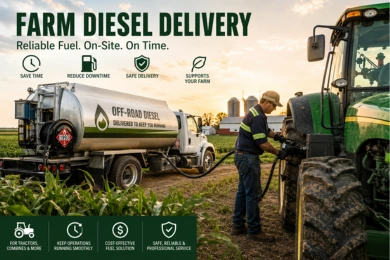
Farm diesel delivery helps you keep tractors, harvesters, irrigation pumps, and generators running without leaving the field for fuel. Instead of transporting fuel yourself, a mobile diesel supplier brings off-road diesel directly to your farm, reducing downtime, improving productivity, and helping your operation stay on schedule during busy seasons.
When planting or harvesting windows are tight, every hour matters. Running out of diesel in the middle of fieldwork can delay operations and increase labor costs. So, how can you make fueling easier, safer, and more reliable for your farm equipment?
Quick Summary
Farm diesel delivery brings fuel directly to your agricultural equipment and storage tanks. It reduces downtime, saves labor hours, and improves fuel management during critical farming operations. Reliable mobile fueling services also help farms maintain equipment productivity while avoiding unnecessary trips to fuel stations.
What Is Farm Diesel Delivery?
Farm diesel delivery is a service that supplies dyed off-road diesel fuel directly to farms, agricultural storage tanks, and field equipment. Suppliers use mobile fueling trucks to refill tractors, combines, generators, and irrigation systems on-site.
This service is especially valuable during planting and harvest seasons when stopping work to refuel can delay the entire operation.
Common Farm Diesel Uses
- Tractors and combines
- Irrigation pumps
- Grain dryers
- Backup generators
- Sprayers and loaders
- Refrigerated farm equipment
Many farms across regions like rural Texas and the Midwest rely on scheduled diesel delivery to maintain daily operations efficiently.
Why Do Farms Need Diesel Delivery?
Farm diesel delivery saves time, improves operational efficiency, and reduces fuel-related downtime. Instead of sending workers to fuel stations, farms receive fuel directly where equipment operates.
Key Benefits
- Reduces equipment downtime
- Minimizes labor interruptions
- Improves fuel inventory management
- Helps during emergency fuel shortages
- Supports seasonal peak workloads
- Reduces transportation risks
Large farms often discover that mobile fueling creates better workflow consistency during demanding agricultural periods.
How Does Farm Diesel Delivery Work?
Farm diesel delivery usually follows a simple scheduling process. The fuel provider delivers diesel to your farm storage tanks or directly into equipment using specialized fueling trucks.
Step-By-Step Fuel Delivery Process
- Contact a diesel delivery provider
- Schedule recurring or emergency delivery
- Confirm fuel type and quantity
- Delivery truck arrives on-site
- Fuel is transferred safely into tanks or equipment
- Usage records and invoices are documented
Many providers now use digital tracking systems to monitor fuel levels and improve delivery timing.
What Equipment Uses Farm Diesel?
Most agricultural operations depend heavily on diesel-powered machinery because diesel engines provide strong torque and long operating hours.
Common Diesel-Powered Farm Equipment
- Row crop tractors
- Harvest combines
- Skid steers
- Water pumps
- Feed mixers
- Utility trucks
- Grain hauling equipment
Reliable fuel availability keeps this equipment operating without costly interruptions.
Is Mobile Diesel Delivery Cost Effective?
Yes, farm diesel delivery can reduce overall operational expenses when managed properly. While delivery fees may apply, many farms save money through improved efficiency and reduced labor waste.
Areas Where Farms Save Money
- Fewer employee fuel trips
- Lower downtime costs
- Reduced wear on transport vehicles
- Better bulk fuel pricing
- Improved fuel consumption tracking
Some farms also report fewer emergency shutdowns because scheduled fueling prevents unexpected shortages.
How To Choose A Diesel Supplier?
Choosing the right diesel delivery company requires more than comparing prices. Reliability, response time, fuel quality, and service coverage are equally important.
Important Questions To Ask
- Do they offer emergency diesel delivery?
- Can they support seasonal demand increases?
- Are fuel deliveries tracked and documented?
- Do they provide DEF delivery services too?
- What safety standards do they follow?
- Can they deliver to remote farmland locations?
A dependable supplier should communicate clearly, deliver on time, and understand agricultural fueling needs.
What Safety Rules Matter Most?
Safe diesel handling protects workers, equipment, and the environment. Farms should follow proper storage and fueling procedures recommended by industry fuel safety standards.
Important Fuel Safety Practices
- Store diesel in approved tanks
- Inspect tanks regularly for leaks
- Keep spill kits available
- Train workers on safe fueling procedures
- Prevent water contamination in fuel
- Maintain proper tank labeling
Organizations like the Occupational Safety and Health Administration and Environmental Protection Agency recommend proper fuel storage and spill prevention practices for agricultural operations.
Pro Tips For Farm Fueling
Smart Fuel Management Tips
- Schedule deliveries before peak harvest periods
- Monitor fuel usage weekly
- Use tank monitoring systems
- Keep backup fuel reserves during storms
- Combine diesel and DEF delivery when possible
- Work with suppliers familiar with agriculture
Many experienced farm operators treat fuel planning as part of their overall crop management strategy.
Final Thoughts
Farm diesel delivery helps agricultural operations stay productive, efficient, and prepared during critical working seasons. Whether you manage a small family farm or a large commercial operation, dependable on-site fuel delivery can reduce downtime and simplify daily logistics.
The right fuel partner does more than deliver diesel. They help your farm maintain steady operations when timing matters most.
FAQ
Most farms schedule weekly, bi-weekly, or seasonal deliveries depending on equipment usage, acreage, and harvest activity.
Most farms use off-road dyed diesel for agricultural equipment because it is intended for non-highway use and often taxed differently.
Yes. Many mobile fueling providers can fill tractors, combines, generators, and other equipment directly on-site.
Many fuel suppliers offer emergency diesel delivery during equipment breakdowns, storms, or unexpected fuel shortages.
Some providers offer both diesel and Diesel Exhaust Fluid delivery services for modern diesel equipment.
Proper tank maintenance, water removal, regular inspections, and sealed storage systems help protect diesel fuel quality.