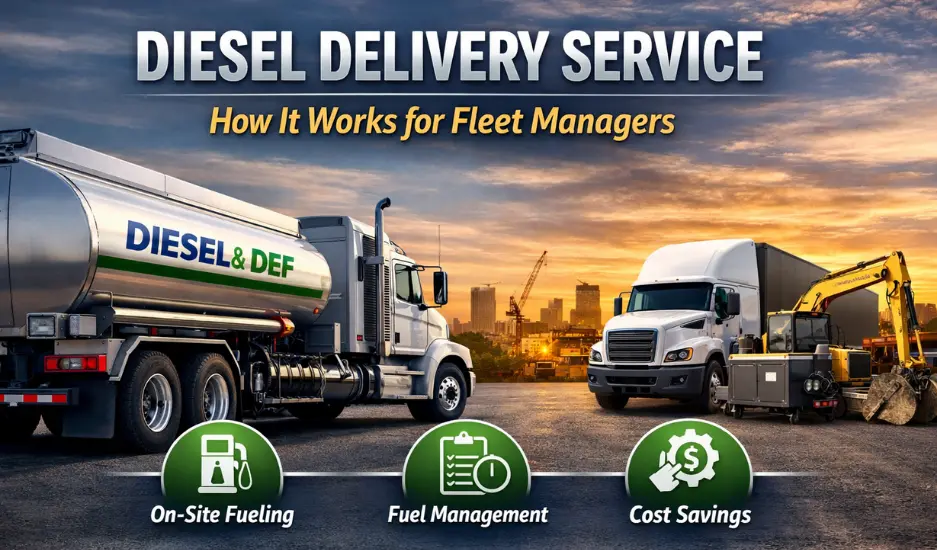
For fleet companies in Washington, fuel is not just a line item. It affects uptime, labor efficiency, route planning, safety, and customer service. That is why more fleet managers are looking at mobile diesel delivery as a smarter way to handle daily fueling.
Instead of sending drivers to retail stations or relying only on fixed fueling infrastructure, a fuel delivery service brings diesel fuel directly to your yard, depot, jobsite, or equipment location. That can simplify fleet operations, reduce wasted hours, and create a more predictable fueling process.
If you manage a logistics fleet, construction company, service fleet, or a fleet of trucks with tight production schedules, this guide explains where mobile diesel delivery fits, how it compares with traditional fueling, and why it can improve both cost control and operational performance.
What is mobile diesel delivery?
Mobile diesel delivery is the on-site delivery of diesel fuel to trucks, equipment, storage tanks, or fleet yards instead of requiring vehicles to stop at a gas station or public fueling location.
This service is commonly used for:
- Fleet fueling
- On-site fueling
- Mobile fleet fueling
- Wet hosing
- Emergency fuel delivery
- Bulk fuel delivery to storage tanks
- Diesel exhaust fluid and DEF solutions support
For commercial fleets, the biggest advantage is convenience with control. Fuel arrives where the work is happening.
Why are fleet companies switching to mobile diesel delivery?

Fleet companies switch because mobile fueling reduces non-productive time, improves schedule control, lowers unnecessary idling, and supports better fuel management.
When vehicles no longer need to detour for fuel, managers can keep drivers focused on delivery routes, service calls, and equipment operation. Reducing unnecessary idling and extra vehicle movement also helps lower fuel waste and emissions. The U.S. Department of Energy and the Alternative Fuels Data Center both note that cutting idle time saves fuel, lowers costs, and reduces engine wear for heavy-duty trucks.
The biggest benefits of mobile diesel delivery for fleets
1. Less downtime for drivers and equipment
One of the clearest benefits of mobile fuel delivery is time savings.
Every stop at a retail station adds hidden cost:
- Drive time off route
- Waiting in line
- Fuel card transactions
- Driver payroll during non-billable time
- Delays to customer deliveries or field service jobs
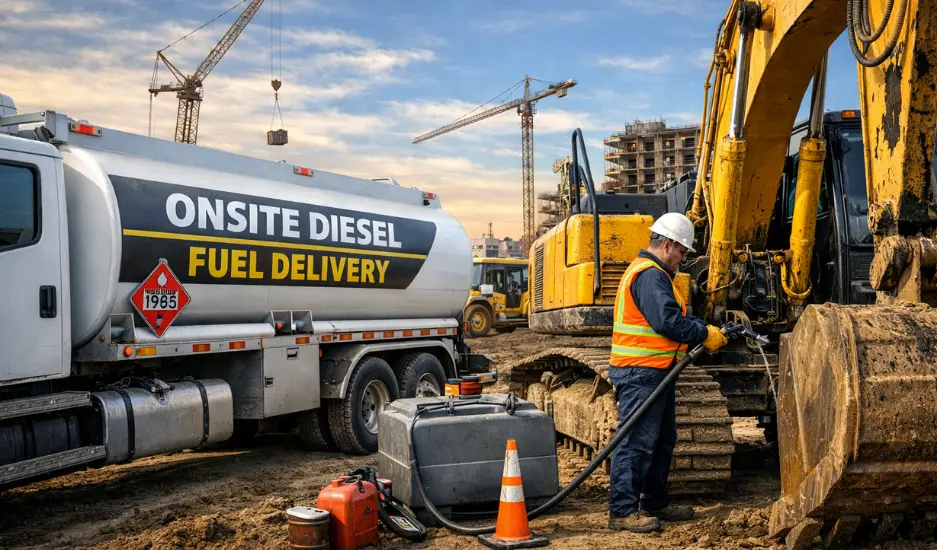
With fleet fuel delivery, vehicles can be fueled at the yard overnight or during planned downtime. For construction fleets, fuel can be delivered directly to the site so machines stay running without repeated trips to refuel.
For a fleet manager, this means better route discipline and fewer interruptions to the delivery schedule.
2. Better fuel cost control
Fuel pricing is never only about the posted pump price. The real cost includes labor, detours, mileage, idle time, and admin work.
A good fuel delivery service can improve cost savings by helping you:
- Reduce unplanned fueling trips
- Consolidate fuel purchasing
- Monitor fuel records more accurately
- Match deliveries to your fuel delivery schedule
- Limit waste across multiple vehicles and job locations
This is especially valuable for B2B fleet operations where a few minutes lost per vehicle can turn into major weekly labor cost.
3. Improved fleet productivity
With mobile diesel delivery, fueling becomes part of the operation, not a disruption to it.
A logistics fleet can fuel overnight.
A service fleet can start the day ready to go.
A construction company can keep machines on-site and on task.
A municipal waste or industrial fleet can reduce unnecessary movement between jobs and fueling points.
This supports stronger fleet management because fueling becomes planned, consistent, and easier to measure.
4. More accurate fuel management data
The best mobile fuel delivery service providers do more than pump fuel. They often help fleets build better fuel tracking and reporting.
That may include:
- Fuel transaction records
- Delivery logs
- Tank level reporting
- Remote monitoring
- Automatic tank monitoring
- Fuel delivery software
- Barcode scanning system or scannable database tools
- Custom software integrations for fuel management systems
For growing operations, this matters. Better records improve forecasting, budgeting, and accountability across drivers, vehicles, and fueling locations.
5. Lower risk of fuel theft and misuse
Fuel loss is a serious issue for many commercial fleets. When fueling happens across multiple public locations, it becomes harder to audit usage and identify unusual patterns.
Mobile fueling services can tighten control by centralizing delivery, documenting transactions, and linking fuel use to specific assets, tanks, or routes. That makes it easier to spot irregular usage and improve internal controls.
6. Safer fueling processes
Safety is another reason many fleets prefer professional diesel delivery service partners.
The EPA notes that storage and delivery systems require proper spill protection, overfill protection, corrosion protection, correct filling practices, and recordkeeping to reduce release risk. It also notes that spills and overfills during delivery can create environmental problems if not managed correctly.
A reliable provider helps reduce these risks with trained delivery procedures, cleaner on-site fueling routines, and stronger safety protocols around storage tanks and fuel tank handling.
7. Easier support for storage tanks and bulk operations
If your business already uses a storage tank or fuel storage tanks, bulk fuel delivery can make your operation more stable.
This is useful for:
- Large fleet yards
- Construction projects
- Agriculture and off-road diesel use
- Backup fueling for emergency operations
- Multi-site businesses with recurring fuel demand
For companies using underground storage tanks, compliance and proper filling practices matter. EPA guidance highlights the importance of protecting UST systems from spills, overfills, and corrosion and maintaining correct operating records.
How mobile diesel delivery compares to traditional fueling
| Factor | Retail Fueling | Mobile Diesel Delivery |
| Driver time | Lost in fueling trips | Mostly preserved |
| Route efficiency | Lower | Higher |
| Fuel records | Often scattered | Usually centralized |
| On-site equipment fueling | Difficult | Easy |
| Emergency response | Limited | More flexible |
| Bulk diesel fuel planning | Harder | Easier |
| Fleet productivity | Interrupted | More predictable |
For many fleet companies, the comparison is simple. Retail fueling may work for a small operation, but once the fleet grows, the hidden operational cost becomes harder to ignore.
What types of fleets benefit most?
Logistics and trucking fleets
A fleet of trucks with fixed dispatch windows benefits from overnight fueling and fewer route deviations.
Construction companies
Construction equipment often burns fuel on-site. On-site fleet fueling services reduce lost machine hours and help protect the production schedule.
Service and utility fleets
Vehicles that start early and cover multiple service calls need reliable morning readiness. Mobile refueling services help keep them moving.
Municipal and industrial fleets
Operations with repetitive routes and centralized yards often gain strong value from scheduled fleet fueling services.
How does renewable diesel fit into the picture?
Renewable diesel can be part of a mobile delivery strategy for fleets looking to lower emissions without changing diesel equipment.
In Washington, the Department of Ecology says organizations that produce or use cleaner transportation fuels may generate credits under the state Clean Fuel Standard. Renewable diesel is specifically listed among the fuels that can qualify for credits when carbon intensity is below the annual standard.
That makes renewable diesel fuel worth evaluating for fleets that want to align fuel purchasing with sustainability goals, carbon emissions planning, or customer reporting expectations.
What about DEF and emissions compliance?
Many modern diesel vehicles also require diesel exhaust fluid. The EPA says vehicles using DEF must meet emissions standards, and onboard diagnostic systems monitor SCR performance, low DEF levels, and certain failures.
For fleet companies, that means a strong fuel partner may also need to support:
- DEF solutions
- Reliable DEF availability
- Fuel quality controls
- Delivery planning for both diesel fuel and DEF
This becomes even more important for high-utilization fleets that cannot afford avoidable downtime.
How to choose the best fuel delivery service
1. Check delivery coverage
Make sure the provider can serve your Washington routes, fleet yards, or job locations consistently.
2. Ask about scheduling
A strong provider should support recurring fuel delivery schedules, emergency fuel delivery, and flexible on-site delivery windows.
3. Review safety standards
Ask how they handle spill prevention, tank fills, site safety, and environmental standards.
4. Evaluate reporting tools
Look for fuel management technology, remote monitoring, tank visibility, and digital records.
5. Confirm fuel options
Some fleets need only diesel fuel. Others may also need off-road diesel, renewable diesel, bulk gasoline delivery, or fuel additives.
6. Consider growth
Pick a mobile fuel supplier that can scale with your fleet operations instead of one that only fits your current size.
Pros and cons of mobile diesel delivery
Pros
- Saves driver time
- Reduces route disruption
- Improves fuel records
- Supports better cost savings
- Helps centralize fuel management
- Can improve safety and control
- Works well for fleet yards and jobsites
Cons
- Not every provider covers every location
- Service quality varies by supplier
- Smaller fleets may need to compare minimum delivery requirements
- Poor scheduling can reduce the value if deliveries are not aligned with actual use
Real-world use case example
A Washington-based service fleet with 35 diesel trucks sends each driver to fuel two or three times a week. Even if each stop adds only 20 to 30 minutes of non-productive time, the weekly labor loss is significant. Shift that fleet to scheduled mobile diesel delivery at the yard overnight, and the manager can recover work hours, simplify fuel records, and start each day with a ready fleet.
That is the real value. It is not only about fuel. It is about time, control, and cleaner operations.
Final thoughts
For most growing fleet companies, mobile diesel delivery is not just a convenience. It is an operations strategy.
It helps reduce downtime, improve route discipline, support better fuel management, and create more predictable fueling across trucks, equipment, and storage tanks. In Washington, it can also align with broader fuel transition goals, especially if your fleet is exploring renewable diesel or other sustainable fuels.
If your current fueling process is costing you hours, increasing admin burden, or making fuel records harder to manage, this is the right time to compare a diesel delivery service with your existing setup.
FAQs
Often, yes in total operating cost. Even if pump prices look similar, fleets can save money by reducing detours, labor time, idling, and unplanned fueling stops. The biggest savings usually come from improved productivity, not just lower fuel pricing.
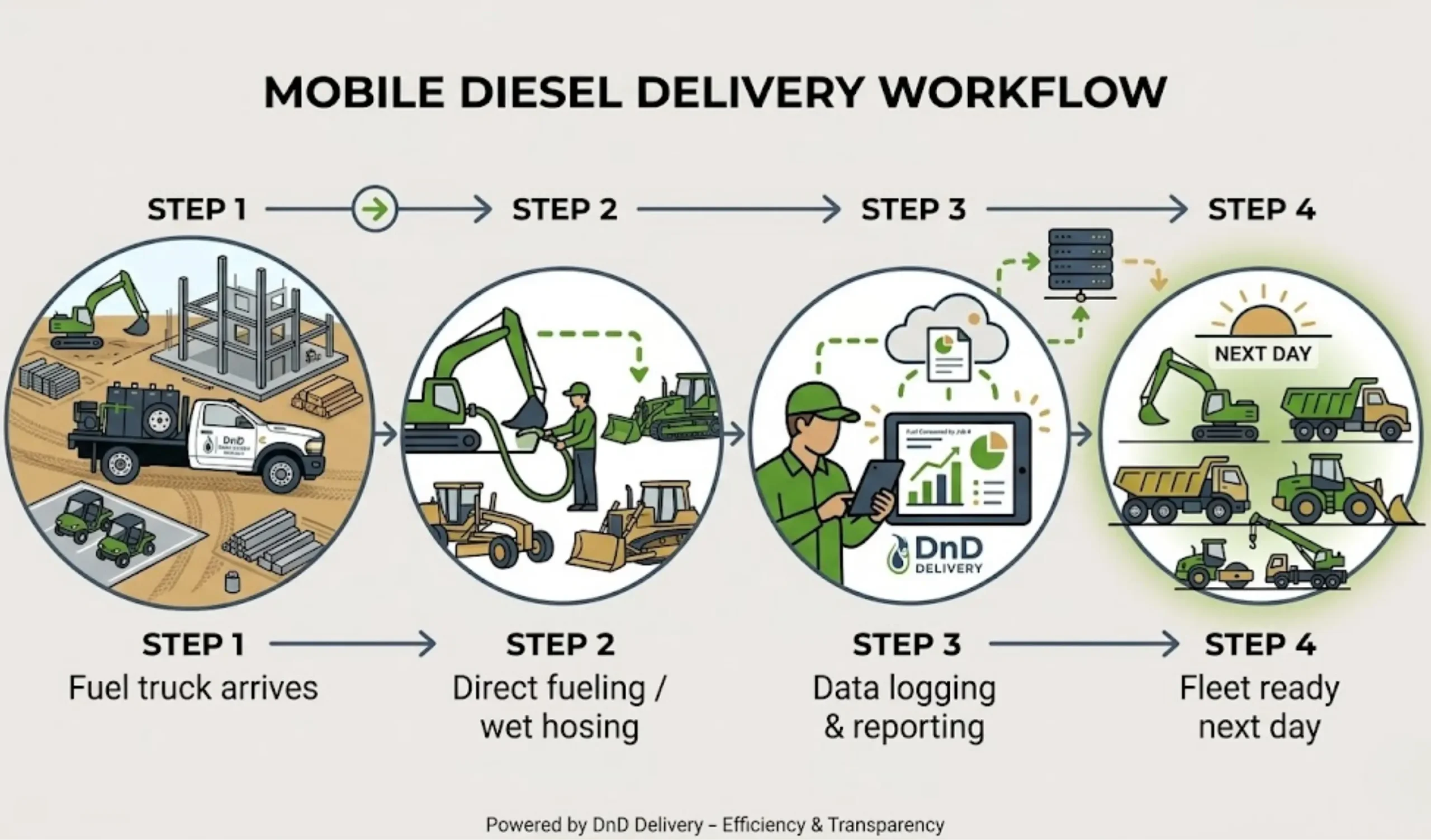
Wet hosing is a fueling method where a delivery truck pumps fuel directly into each vehicle or piece of equipment on-site. It is commonly used for fleet fueling services when companies want every unit fueled without drivers visiting retail stations.
Yes. It is one of the best use cases. Construction equipment often stays on-site for long hours, so on-site delivery helps reduce machine downtime, protect the production schedule, and simplify fuel logistics.
Many commercial fuel suppliers offer renewable diesel fuel through mobile delivery, depending on market availability and region. In Washington, renewable diesel can also connect with Clean Fuel Standard credit opportunities.
For many fleets, yes. Modern diesel vehicles often depend on DEF for emissions system performance, so getting diesel fuel delivery and DEF solutions from one partner can improve scheduling and reduce downtime risk.