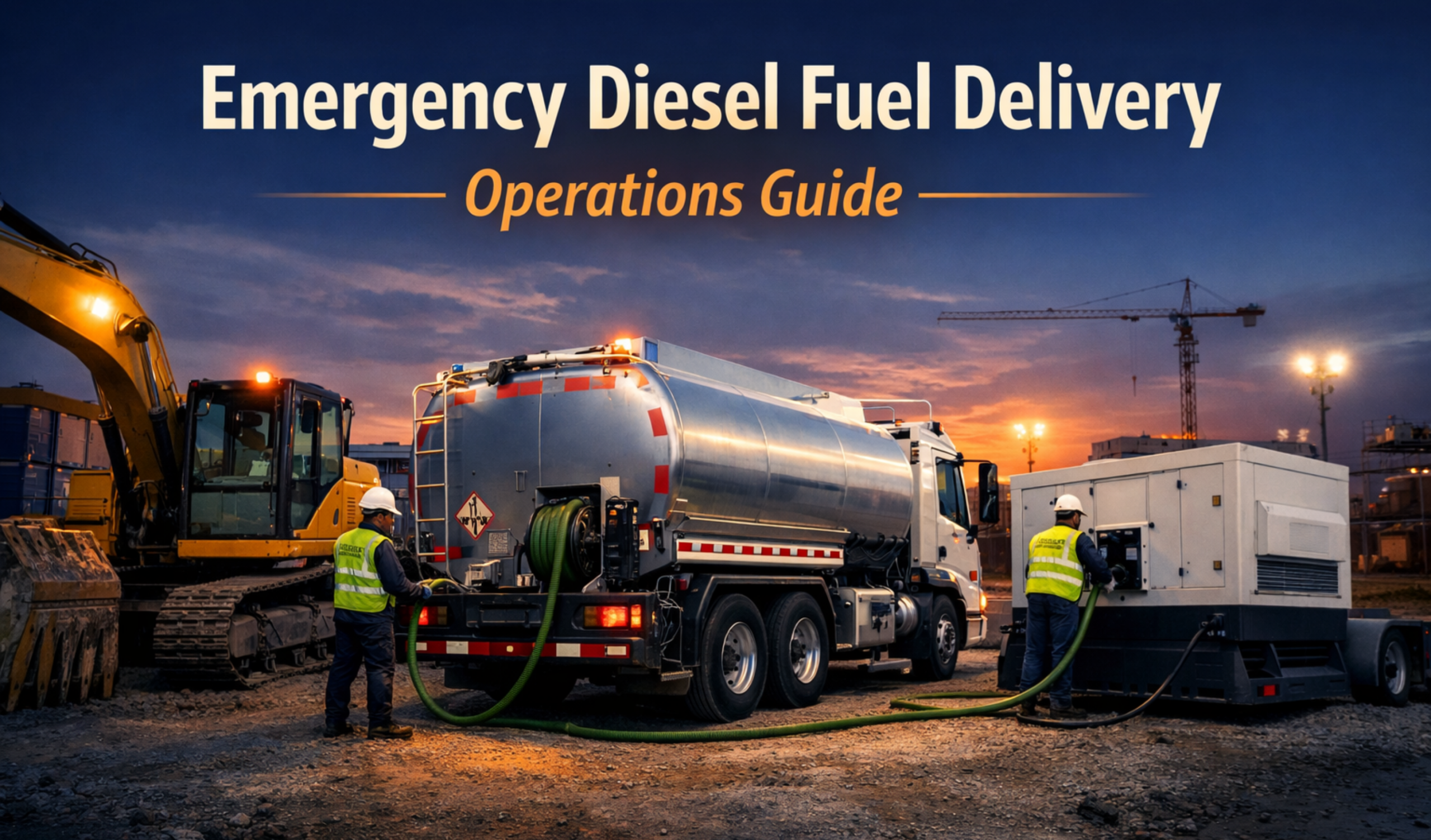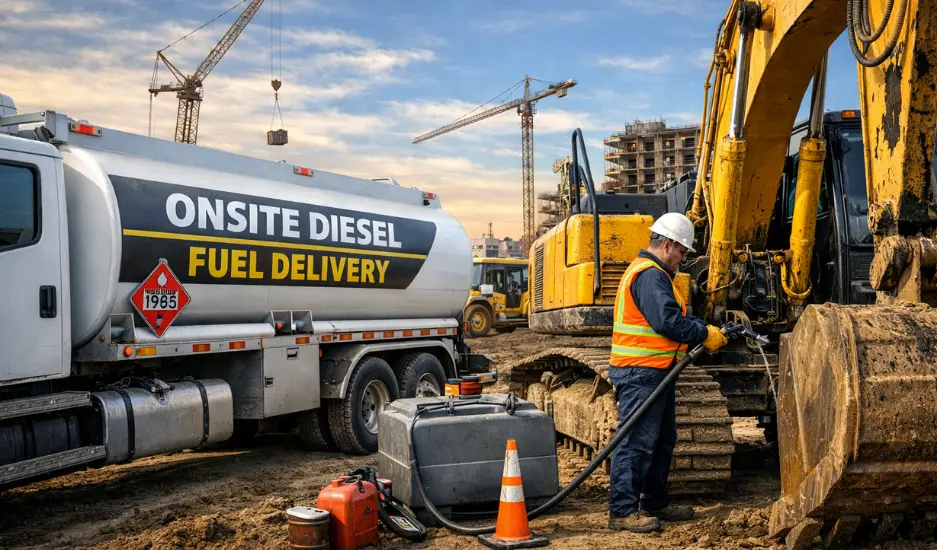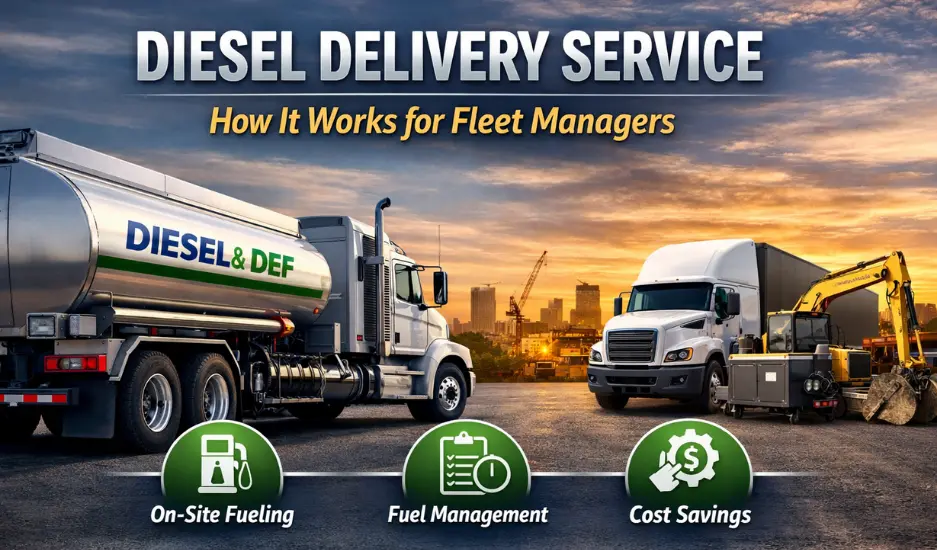
Fleet managers can use a diesel delivery service to bring fuel right to trucks, equipment, generators, or storage tanks. This saves time by eliminating trips to gas stations. It saves time, reduces downtime, improves fuel planning, and helps keep operations moving. In simple terms, the supplier comes to your yard, job site, or roadside location with the fuel you need.
What Is a Diesel Delivery Service?
A diesel delivery service brings fuel right to you. A licensed provider uses certified fuel or tanker trucks for this.
The service may offer:
- On-site fueling
- Bulk tank fills
- Emergency fuel delivery
- Roadside fuel delivery
- Recurring scheduled deliveries
In the US, fuel transport follows federal hazardous materials rules. Fuel storage and spill response are closely watched by state agencies, like the Washington State Department of Ecology.
For fleet operations, that means fuel can be delivered to:
- Trucks parked in a depot
- Construction equipment at a construction site
- Refrigerated trailers
- Backup generators for power generation
- Fuel storage tanks at commercial facilities
How Does Diesel Delivery Service Work?
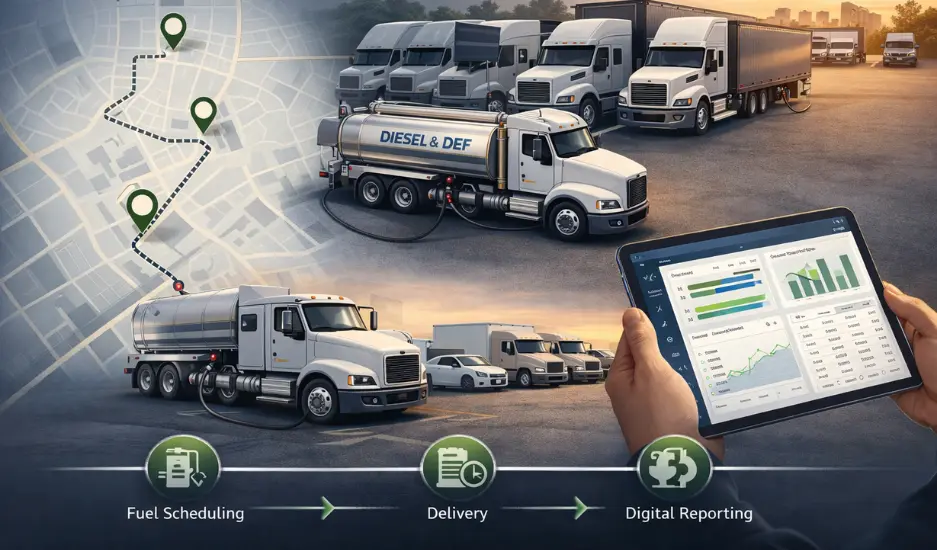
A diesel delivery service usually follows a simple process. The exact setup depends on whether you need on-demand gasoline, diesel fuel delivery, DEF solutions, or Bulk Diesel Fuel Delivery.
1. You place an order or set a schedule
A fleet manager requests fuel based on tank size, vehicle count, fuel type, and delivery timing. This can be one-time, emergency, or part of a fuel delivery schedule. Many fuel delivery companies now use online portals, automated scheduling, and remote monitoring to manage orders more efficiently.
2. The supplier plans the delivery route
The supplier checks the location, fuel quantity, access conditions, and safety requirements. For larger accounts, this is often built into a fuel management plan that supports inventory management and automated scheduling.
3. Certified fuel trucks arrive on site
The fuel is transported by licensed drivers using certified fuel trucks or tank trucks designed for safe fuel transportation. Depending on the job, the delivery may go into vehicles, bulk tanks, or mobile equipment. Federal rules cover packaging, markings, and safety requirements for combustible and flammable fuels during transport.
4. Fuel is dispensed and tracked
The crew delivers On-Road Diesel, off-road diesel, renewable diesel fuel, or related products like diesel exhaust fluid. Good suppliers record gallons delivered, time on site, unit numbers, and fuel inventory updates. This is where fuel tracking technology and fuel monitoring become valuable.
5. Reporting and billing are completed
After delivery, the customer receives delivery records, invoices, and often digital reporting through an Online Payment Portal. This helps with budget control, job costing, and fuel efficiency tracking.
What Types of Diesel Fuel Delivery Services Are Available?
Fleet managers usually choose one or more of these service models:
On-site fueling
This is ideal for fleet yards, construction companies, and equipment-heavy operations. A fuel truck comes to your site and fills each vehicle or machine while it is parked.
Bulk diesel fuel delivery
This works best when you have a storage tank at your site. The supplier fills the tank, and your team fuels from there. This option often supports better planning and bulk purchasing.
Emergency fuel delivery
This helps when a truck, generator, or machine runs low unexpectedly. It is common for remote jobsites, after-hours needs, and urgent operational issues.
Roadside fuel delivery
This is useful for stranded trucks or time-sensitive routes where a vehicle cannot make it to the next fueling point.
Mobile fleet fueling
This is a strong option for large fleet operations that want vehicles fueled overnight or during off-hours so drivers start the day ready to move.
Why Fleet Managers Use Diesel Delivery Service
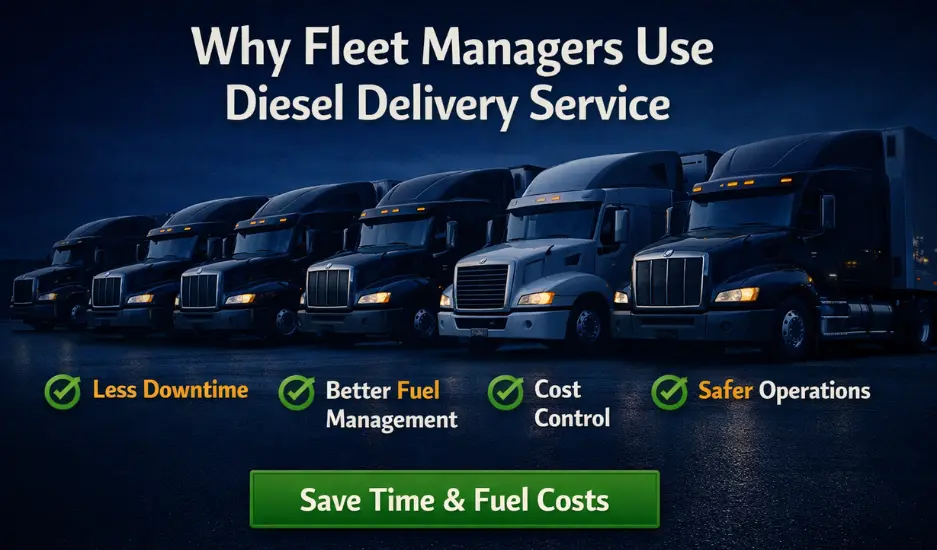
1. Less downtime
When drivers do not need to stop for fuel, they stay on route longer. That directly improves productivity.
2. Better fuel management
A reliable provider can support fuel management systems, fuel inventory visibility, and scheduled deliveries. That helps reduce guesswork and avoid last-minute shortages.
3. Easier cost control
Fuel delivered in bulk can reduce time waste and simplify fuel payments. It also gives managers cleaner records for fuel budget planning.
4. Stronger operational control
With mobile fleet fueling, vehicles can be fueled by delivery schedule instead of driver choice. That makes usage easier to track and standardize.
5. Safer fueling processes
Professional suppliers use safety protocols such as overfill prevention, spill containment systems, trained crews, and regulated delivery procedures. Washington also has active spill prevention and cleanup oversight, and the state’s underground storage tank program stresses leak prevention, inspection, and monitoring.
What Fuel Types Can Be Delivered?
Not every fleet needs the same product. A supplier may offer:
- On-Road Diesel for highway vehicles
- Off-road diesel for construction equipment and certain non-road uses
- Renewable diesel
- Diesel exhaust fluid
- Fuel additives
- DEF solutions for modern diesel vehicles
The EPA notes that diesel standards differ for on-road and non-road applications, and ultra-low sulfur diesel requirements have been a major part of US diesel regulation. EPA also explains that DEF is used to help certain diesel vehicles meet emissions standards.
What Should Fleet Managers Ask Before Hiring a Provider?
Here are the most important questions to ask:
Are they licensed and compliant?
Make sure the company uses licensed drivers, certified Delivery Crew members, and fuel delivery vehicles that meet transport and safety requirements.
Can they support your fuel management plan?
Look for fuel monitoring, reporting, scannable database records, remote monitoring, and inventory management support.
Do they offer emergency service?
Not every supplier can handle emergency fuel delivery or roadside fuel delivery quickly.
What is their delivery coverage?
Check whether they can serve your routes, depot, warehouse, or construction site consistently.
Do they handle DEF and renewable diesel?
If your fleet uses modern diesel systems, this matters. DEF is especially relevant for many newer diesel engines.
Pros and Cons of Diesel Delivery Service
| Pros | Cons |
| Reduces driver downtime | May require minimum order sizes |
| Improves scheduling | Emergency delivery can cost more |
| Supports fuel tracking | Service quality varies by provider |
| Helps with bulk purchasing | Storage tanks need monitoring and compliance |
| Better for fleet efficiency | Coverage may be limited in some areas |
Real-World Use Cases
Construction company
A construction company can schedule on-site delivery every morning for excavators, loaders, and generators. That keeps equipment working and avoids wasted labor time.
Refrigerated trailers
A logistics operator with refrigerated trailers may use mobile fuel delivery service to keep both trucks and temperature-control equipment fueled on schedule.
Backup power generation
Facilities with generators often use diesel fueling services to maintain emergency readiness, especially during weather-related outages or peak demand periods.
Best Tips to Get More Value From Fuel Delivery Services
- Match delivery schedule to actual fuel consumption
- Use tank monitoring for better inventory control
- Separate on-road and off-road fuel use clearly
- Track every fill by vehicle or asset
- Compare bulk purchasing options against retail fueling
- Ask about renewable diesel fuel if sustainability goals matter
Is diesel delivery service worth it for fleet managers?
Yes. A diesel delivery service is often worth it for fleet managers because it reduces downtime, improves fuel tracking, supports scheduled refueling, and helps control operating costs. It is especially useful for fleets with fixed yards, jobsites, generators, or equipment that lose productive time when they travel off-route for fuel.
How is diesel delivered to a fleet?
Diesel is delivered to a fleet by a licensed fuel supplier using certified fuel trucks or tanker trucks. The supplier follows a delivery route, arrives on site, dispenses diesel into vehicles or storage tanks, records the fuel volume delivered, and provides tracking and billing records.
FAQs
It can be, especially when you factor in labor time, route disruption, idle time, and bulk pricing. The fuel price alone does not tell the full cost story.
Yes. Many providers offer overnight mobile fleet fueling so vehicles are ready before the workday starts.
On-road diesel is for highway vehicles. Off-road diesel is generally used for non-road equipment such as construction machinery, subject to applicable use rules and tax treatment.
Many do. This is useful for fleets running newer diesel vehicles that require diesel exhaust fluid for emissions systems.
Yes, when handled by trained crews using proper safety protocols, spill controls, and compliant fuel trucks. That is why supplier standards matter.
Final Thoughts
For fleet managers, diesel delivery is not just a convenience. It is an operations tool. The right provider helps reduce downtime, improve fuel logistics, support fuel management systems, and keep vehicles, tanks, and equipment ready to work. Whether you manage a local business, a construction site, refrigerated trailers, or standby power systems, a well-run diesel delivery service can make your fuel strategy more efficient and more predictable.