
Diesel Fuel Logistics: The Complete Guide 2026
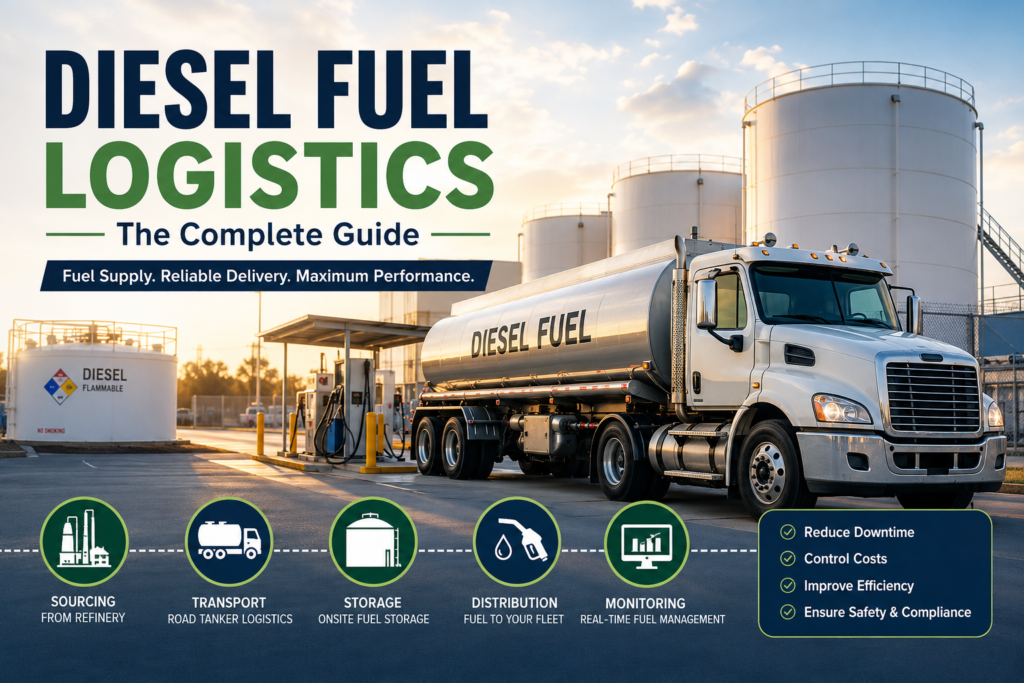
Diesel fuel logistics is the end-to-end process of sourcing, transporting, storing, and delivering diesel fuel to fleets, job sites, and industrial operations. If your business runs on diesel whether you manage ten trucks or a thousand getting fuel logistics right is one of the most direct ways to protect your uptime and your bottom line. Most logistics companies don’t think about fuel as a supply chain problem until something goes wrong. A delayed tanker, an empty storage tank, or a poorly managed fuel card program can ground your fleet within hours. So the real question isn’t whether diesel fuel logistics matters, it’s whether your current setup is working as hard as it should be. Quick Summary Diesel fuel logistics covers the full journey from refinery to fuel tank including bulk fuel delivery, road tanker logistics, onsite fuel storage, and fleet fuel management. A reliable fuel logistics provider reduces downtime, controls costs, and keeps large fleets moving. Choosing the right partner means looking at delivery reliability, telemetry tools, and flexible supply options including HVO fuel alternatives. How Does a Fuel Supply Chain Actually Work? The fuel supply chain is more complex than most people realize, and understanding it helps you spot where inefficiencies hide. At its core, petroleum logistics moves refined diesel from terminal storage facilities through a network of road tankers and distribution hubs to end users. For large fleets and industrial operations, that journey often involves multiple handoffs from the fuel logistics company to regional depots, to on-site storage tanks, to individual vehicles. Here’s what typically happens behind the scenes: In regions like the Gulf Coast and Midwest, where industrial fuel supply demand runs high, well-structured petroleum logistics can mean the difference between a smooth quarter and a costly operational disruption. What Are the Key Components of Bulk Fuel Delivery? Bulk fuel delivery is the backbone of any serious diesel fuel logistics operation. It refers to the large-volume transportation of diesel, typically 5,000 to 40,000 liters per load, directly to your site or depot. The main components include: If you’re running a transport fleet or managing an industrial site, bulk diesel delivery is almost always more cost-effective than relying on retail pump pricing. How Do You Choose a Fuel Logistics Provider? Choosing the right fuel logistics provider isn’t just about price. Reliability, technology, and flexibility matter just as much especially when your operations depend on fuel being there when you need it. Ask any potential fuel transport company these questions before signing a contract: A credible fuel logistics provider will answer all of these without hesitation. Look for companies that are members of recognized industry bodies in the US, that includes the Petroleum Equipment Institute (PEI) and the National Tank Truck Carriers (NTTC) association. These affiliations signal that your partner holds themselves to professional standards for fuel storage and transportation. How Can Fleet Fuel Management Cut Costs? Fleet fuel management is one of the highest-leverage tools a logistics company has for reducing operating costs. Fuel typically accounts for 25–35% of total fleet operating expenses, which means even a 5% efficiency gain has a real impact on your numbers. Effective diesel fuel management combines: Companies managing commercial fleet fuel in competitive markets are increasingly moving toward integrated fleet fuel solutions platforms that combine delivery scheduling, usage analytics, and carbon reporting in one dashboard. If your fuel logistics provider can’t offer this level of visibility, it may be time to look at alternatives. Step-by-Step: Setting Up Onsite Fuel Storage Setting up onsite fuel storage correctly from the start prevents costly compliance issues and operational headaches down the line. Follow these steps: Step-by-Step: Optimizing Your Fuel Distribution Services Once your storage and delivery infrastructure is in place, the next step is optimization making sure every liter of diesel is working as hard as possible. Pro Tips for Safer, Smarter Fuel Transportation Working with diesel at scale comes with real responsibilities. Here are practical insights from years in fuel haulage services and commercial fleet fuel supply: Frequently Asked Questions Final Thoughts Diesel fuel logistics isn’t a background function it’s a strategic lever. When your fuel supply chain is tight, your fleet keeps moving. When it isn’t, you feel it in every KPI that matters. Whether you’re building out onsite fuel storage for the first time, looking for a more capable fuel transport company, or trying to get more from your existing fleet fuel management setup, the principles are the same: plan around real data, choose partners who can grow with you, and never treat fuel as an afterthought. The logistics companies that get this right don’t just reduce cost, they build resilience. And in an industry where margins are tight and downtime is expensive, resilience is everything.