
Diesel vs Regular Gas Differences Explained
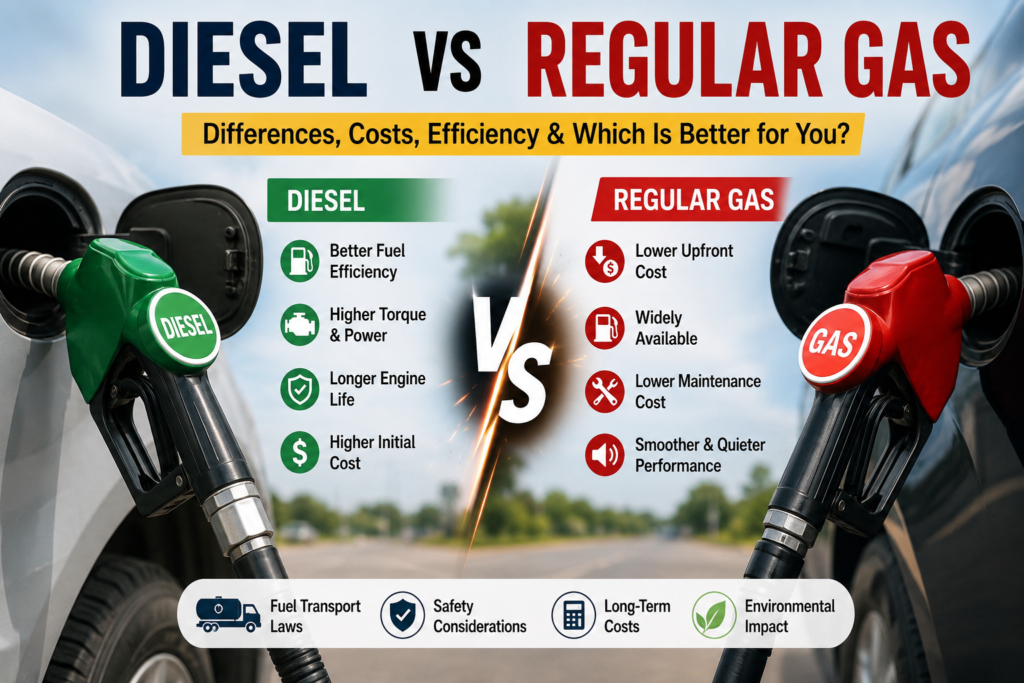
When comparing diesel vs regular gas, the biggest difference is how the fuel burns, how engines perform, and what each fuel is designed to power. Diesel engines usually offer better fuel economy and torque, while regular gas engines are quieter, cheaper to maintain, and more common for personal vehicles. If you run a fuel business, manage commercial fleets, or transport fuel across regions like Texas or California, understanding these fuel differences can help you make smarter operational and compliance decisions. But which fuel is safer, more efficient, and better for long-term use? Quick Summary Diesel fuel provides better fuel efficiency, higher torque, and longer engine life for heavy-duty work. Regular gas is usually cheaper upfront, easier to maintain, and ideal for everyday passenger vehicles. For fuel businesses and fleet operators, diesel often makes more sense for commercial transportation because of durability and lower long-term operating costs. What Makes Diesel Different? Diesel and gasoline are refined differently and ignite in completely different ways. Diesel engines use compression ignition, while gasoline engines rely on spark plugs. Key Differences In real-world fleet operations, many transportation companies choose diesel because trucks carrying heavy loads need pulling power more than speed. Why Do Diesel Engines Last Longer? Diesel engines typically last longer because they are built tougher to handle higher compression and heavy workloads. Many commercial trucks can exceed hundreds of thousands of miles with proper maintenance. Reasons Diesel Engines Last Longer Fleet managers often notice diesel trucks staying productive longer under demanding hauling conditions. That durability matters when downtime affects delivery schedules and profits. Is Regular Gas Better Daily? Yes, regular gas is often better for daily commuting and light personal driving. Gasoline vehicles are usually quieter, easier to start in cold weather, and less expensive to repair. Benefits of Regular Gas Vehicles For city drivers in places like London or major U.S. urban areas, gas vehicles can feel more practical because stop-and-go traffic does not always benefit diesel efficiency. How Do Fuel Transport Laws Differ? Fuel transport laws for diesel and gasoline differ because gasoline is more flammable and considered a higher fire risk during storage and transportation. Diesel vs Gasoline Regulations Factor Diesel Regular Gas Flash Point Higher Lower Fire Risk Lower Higher DOT Classification Combustible Flammable Storage Rules Less restrictive More restrictive Transport Safety Easier handling Stricter controls In the United States, fuel businesses transporting gasoline often face stricter Department of Transportation compliance standards due to vapor ignition risks. Important Compliance Areas Organizations like the U.S. Department of Transportation and Environmental Protection Agency help regulate fuel safety and environmental compliance standards. Which Fuel Costs More Long-Term? The answer depends on how you use the vehicle. Diesel vehicles usually cost more upfront, but they can save money over time through better fuel economy and longer engine life. Long-Term Cost Factors Diesel Costs Gasoline Costs For businesses operating delivery fleets, diesel often becomes more cost-effective after years of continuous use. Can You Put Wrong Fuel? No, you should never put diesel into a gasoline engine or gasoline into a diesel engine. Doing so can cause severe engine damage and expensive repairs. What Happens If You Use Wrong Fuel? If misfueling happens, stop driving immediately and contact a fuel recovery specialist before restarting the vehicle. What Are Common Diesel Misconceptions? Many drivers still believe diesel engines are noisy, dirty, and unreliable. Modern diesel technology has improved significantly with cleaner emissions systems and better fuel injection designs. Common Myths Today’s clean diesel systems are far more advanced than older commercial engines from decades ago. Pro Tips & Safety Advice Best Practices For Fuel Businesses Safety Reminders Businesses handling both diesel and gasoline should create written fuel handling SOPs to reduce accident risks and improve compliance readiness. FAQs Final Thoughts Understanding diesel vs regular gas helps you make smarter decisions whether you manage a commercial fleet, operate a fuel delivery company, or simply want the right vehicle for your needs. Diesel excels in durability, efficiency, and heavy-duty performance. Regular gas remains practical, affordable, and convenient for everyday drivers. The best choice depends on your workload, driving habits, maintenance expectations, and operational goals.