
DEF Delivery Service for Fleet Vehicles 2026
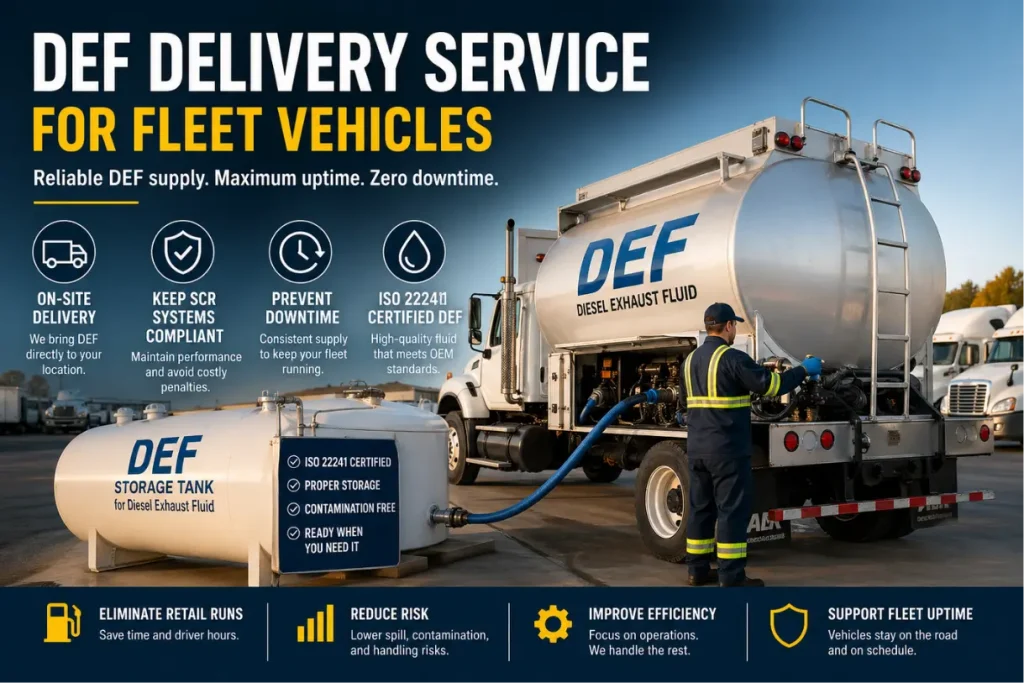
A DEF delivery service supplies diesel exhaust fluid directly to your fleet location, eliminating the need to purchase and transport DEF in-house. For fleet operators, on-site delivery reduces handling time, keeps SCR systems compliant, and prevents costly downtime caused by running out of fluid. It works best for fleets with regular DEF consumption and limited storage capacity. Why DEF Supply Is a Fleet Operations Issue Diesel exhaust fluid is not optional for modern diesel fleets. Any vehicle equipped with a selective catalytic reduction (SCR) system requires DEF to operate. Without it, the engine de-rates and eventually shuts down. For fleet managers, this creates a recurring logistics challenge. DEF must be on hand at all times, stored correctly, and used before it degrades. Sourcing it in small quantities from retail locations wastes time and adds cost. Handling bulk containers without proper equipment creates spill risks and compliance exposure. A professional DEF delivery service removes most of this friction by bringing fluid directly to your yard, job site, or facility on a scheduled or on-demand basis. How DEF Delivery Service Works for Fleets The basic model is straightforward. A provider delivers DEF in bulk, typically via a dedicated tanker or service truck, directly to your location. The fluid is pumped into on-site storage tanks or dispensed directly into vehicle tanks depending on your setup. Most providers offer two delivery models: Scheduled delivery: Regular intervals based on your fleet’s consumption rate. The provider manages replenishment so you do not have to track tank levels manually. On-demand or emergency delivery: Triggered when stock drops below a threshold or when unexpected demand occurs. This is useful for project spikes or seasonal surges. Some operators combine both, using scheduled delivery as the baseline and on-demand delivery as a backup when consumption outpaces the schedule. DEF Storage: What Fleet Operators Need to Know DEF degrades in heat and UV exposure. Proper storage directly affects fluid quality and SCR system performance. Factor Requirement Why It Matters Storage temperature Below 77°F preferred; avoid freezing High heat degrades urea concentration UV exposure Opaque or covered containers only Sunlight breaks down DEF quickly Container material Stainless steel or HDPE only Metals like copper or zinc contaminate DEF Shelf life 12 months at proper conditions Degraded DEF can damage SCR components Fill equipment Dedicated DEF-only pumps and hoses Cross-contamination with diesel is a serious risk When you use a reputable DEF delivery service, the provider manages storage compatibility and ensures the fluid meets ISO 22241 standards before delivery. Pros and Cons of Using a DEF Delivery Service Pros Eliminates manual procurement: No staff time spent sourcing, ordering, or transporting DEF. Consistent supply: Scheduled delivery keeps tanks filled without requiring manual monitoring. Reduced handling risk: Bulk delivery by trained operators lowers spill and contamination risk. ISO-compliant fluid: Reputable providers deliver certified DEF that meets OEM requirements. Scalable to fleet size: Works for small fleets with one tank and large operations with multiple dispensing points. Supports uptime: Vehicles stay operational because SCR systems never run dry. Cons Minimum order requirements: Some providers require minimum delivery volumes that may not suit very small fleets. Lead time for on-demand delivery: Scheduling constraints may mean same-day service is not always available in all areas. Storage infrastructure needed: On-site tanks must meet specifications. If your facility lacks compliant storage, setup costs apply. Dependency on provider reliability: If your delivery schedule is missed, you need a backup plan. Common Mistakes Fleets Make with DEF Management Treating DEF like diesel: DEF has unique storage and handling requirements. Using diesel equipment for DEF causes contamination and SCR damage. Waiting until tanks run empty: SCR systems can de-rate before the DEF light triggers a warning. Monitor levels proactively, not reactively. Buying retail DEF in large volumes for storage: Small containers purchased in bulk often sit too long in suboptimal conditions and degrade before use. Ignoring shelf life on stored inventory: DEF that has exceeded its shelf life should not be used. Always check date markings and storage conditions before dispensing. Assuming all DEF is the same: Product quality varies. Only use DEF that meets API certification and ISO 22241 standards to protect SCR components. When DEF Delivery Service Makes Sense for Your Fleet This option is a strong fit if any of the following apply: Your fleet consumes DEF consistently across multiple vehicles or pieces of equipment. You operate from a central yard, depot, or job site where a bulk tank can be installed. Your drivers currently source DEF from retail locations, adding mileage and time to each shift. You have experienced DEF shortages that caused vehicle downtime or scheduling disruptions. Your operation runs in remote areas where DEF availability is inconsistent. You manage heavy equipment, generators, or refrigerated trailers that also require DEF. Smaller fleets with fewer than five vehicles may find retail supply sufficient, but any fleet beyond that scale typically benefits from structured delivery and on-site storage. DEF and Broader Fuel Logistics For most fleet operations, DEF does not exist in isolation. It runs alongside diesel fuel as part of an integrated fuel management workflow. Fleets that already use mobile diesel delivery services often find it efficient to consolidate DEF delivery through the same provider. This creates a single point of contact for fuel logistics, simplifies scheduling, and reduces the number of vendor relationships to manage. Some providers offer combined diesel and DEF delivery on the same truck, which works well for yards and job sites where both are consumed in parallel. Generator-dependent facilities also benefit from bundled delivery. If you run standby generators on diesel, those systems increasingly require DEF as well, particularly newer Tier 4 Final engines. Key Takeaways DEF is a non-negotiable requirement for SCR-equipped diesel fleets. Running out causes engine de-rating and downtime. On-site DEF delivery eliminates retail sourcing, reduces handling risk, and keeps vehicles compliant without manual effort. Proper storage conditions directly affect DEF quality. Temperature, UV exposure, and container material all matter. Scheduled delivery works best for consistent consumption. On-demand delivery covers