
Mobile Diesel Fuel Delivery vs Gas Station Refueling
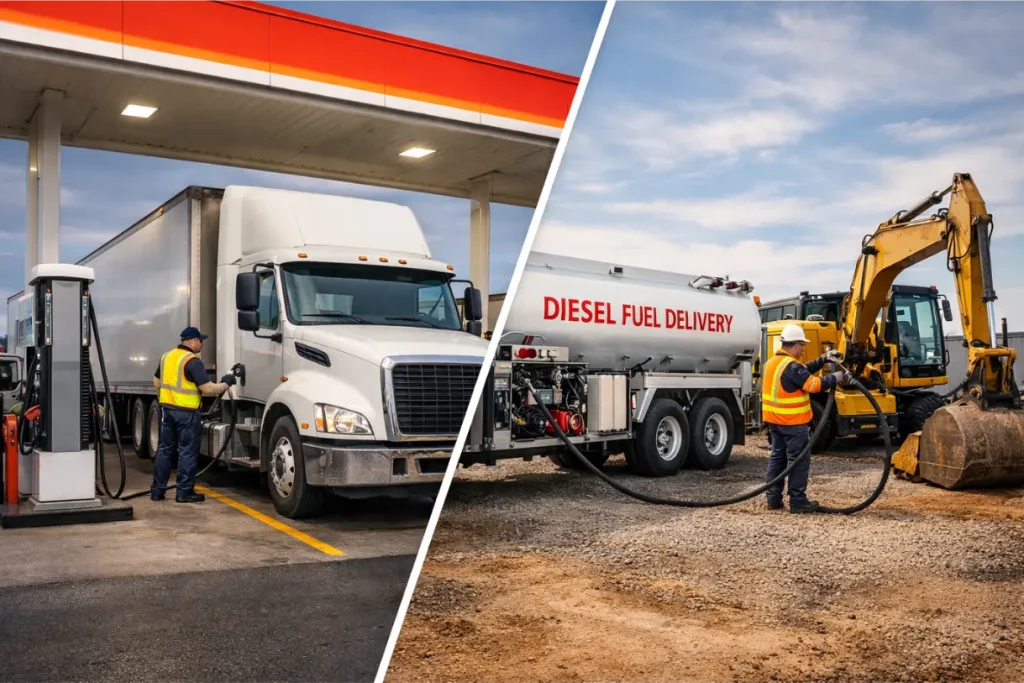
Mobile diesel fuel delivery reduces downtime, improves scheduling, and lowers indirect costs compared to traditional refueling. Instead of sending vehicles to gas stations, fuel comes directly to your fleet or job site. This approach supports better operational efficiency, safer refueling, and more control over fuel consumption. For most fleets and industrial operations, mobile fueling offers a more efficient and scalable solution. The Evolution of Diesel Fleet Management Fleet operations depend on uptime. Every delay affects productivity and costs. The refueling process plays a critical role in daily operations, yet many businesses still rely on outdated methods. The Age-Old Problem of Refueling Traditional refueling methods require drivers to leave job sites and visit gas stations. This creates unnecessary travel, wasted labor hours, and inconsistent fueling schedules. For growing fleets, these inefficiencies add up quickly. Modern operations now shift toward mobile diesel fuel delivery, which removes the need for off-site refueling and brings fuel directly to vehicles and equipment. Traditional Diesel Refueling: Unseen Costs and Bottlenecks The Hidden Drain on Time Drivers often spend hours each week visiting refueling stations. This reduces active working time and delays deliveries or project timelines. For construction job sites or industrial operations, equipment may sit idle while waiting for fuel. This impacts overall operational efficiency. Financial Impact Beyond Fuel Price Fuel cost is not just the price per gallon. Traditional refueling includes: Labor costs for drivers Vehicle wear from extra miles Idle time during refueling trips Poor route optimization These hidden costs often exceed the visible savings from lower pump prices. Safety and Quality Risks Public gas stations introduce variables that businesses cannot control. These include: Inconsistent fuel quality Increased risk of spills during manual refueling Exposure to road safety hazards For regulated industries, maintaining compliance becomes harder when refueling happens off-site. Mobile Diesel Fueling: Bringing Fuel to Your Fleet The Mobile Fueling Process Mobile fueling simplifies the entire workflow. A typical process includes: Fleet submits a fuel delivery request or schedules recurring service Fuel trucks arrive at yards or job sites Vehicles and equipment are fueled during off-hours or downtime Digital reports track fuel consumption and usage This on-site fueling model supports efficient fueling processes without disrupting operations. Advantages of Mobile Diesel Fueling Maximized Efficiency and Time Savings Mobile fueling removes unnecessary travel. Vehicles stay on-site and ready for work. For fleet managers, this improves: Route planning Equipment availability Daily productivity This is especially valuable for transportation fleets and job sites with tight schedules. Cost Savings and Budget Control Mobile fuel delivery service helps reduce indirect costs. Businesses gain: Lower labor expenses Reduced fuel waste Better tracking of fuel consumption patterns With digital reports and data analytics, companies gain more control over fuel budgets. Safety, Quality, and Compliance On-site fueling improves safety by limiting driver exposure to public roads and crowded refueling stations. It also supports: Safer handling practices Compliance with safety regulations Consistent fuel quality For industries that rely on strict regulatory compliance, this is a major advantage. Flexibility and Convenience Mobile fueling adapts to business needs. It works for: Overnight fleet fueling Emergency services Remote job sites Generator fueling during outages This flexibility ensures fuel accessibility at all times. Technology and Data Insights Modern mobile fuel delivery integrates technology such as: GPS systems and real-time tracking Fuel delivery apps IoT integration for monitoring tanks Digital payments and contactless services These tools provide actionable insights into fuel usage and operational performance. Comparison Table: Mobile vs Traditional Refueling Factor Mobile Fueling Traditional Refueling Time Efficiency High, no travel required Low, requires trips to stations Labor Costs Reduced Higher due to driver time Fuel Tracking Real-time digital reports Limited manual tracking Safety Controlled environment Exposure to public risks Convenience On-site fueling Off-site dependency Operational Impact Minimal disruption Frequent interruptions Pros and Cons Mobile Fueling Pros Saves time and improves productivity Reduces labor and operational costs Enhances safety and compliance Offers real-time tracking and reporting Supports sustainability by reducing travel emissions Mobile Fueling Cons Requires scheduling or service planning Availability may vary by region Initial setup for systems integration Traditional Refueling Pros Widely available No service contracts required Traditional Refueling Cons High hidden costs Operational disruptions Limited fuel data visibility Increased safety risks Who Benefits Most? Mobile fueling works best for: Fleet management teams handling large vehicle volumes Construction and industrial job sites Delivery trucks operating on tight schedules Emergency services requiring constant readiness Generator-dependent facilities needing reliable fuel supply For these operations, the benefits for businesses go beyond convenience. They directly impact uptime and resource management. Common Mistakes to Avoid Ignoring hidden costs of traditional refueling Failing to track fuel consumption data Overlooking safety risks at public stations Not aligning fueling strategy with operational goals Delaying adoption of efficient fueling solutions Businesses that address these gaps often improve both cost savings and operational efficiency. Key Takeaways Mobile fueling eliminates unnecessary travel and downtime It provides better control over fuel consumption and costs Safety and compliance improve with on-site fueling Technology integration enables smarter fleet management It supports long-term operational efficiency and sustainability Conclusion: The shift toward mobile diesel fuel delivery reflects how modern businesses prioritize efficiency, safety, and control. Traditional refueling methods no longer meet the demands of large fleets and complex operations. By bringing fuel directly to vehicles and equipment, mobile fueling supports uptime, reduces costs, and simplifies fuel logistics. For many US-based operations, it is becoming the standard approach to smarter fleet management. FAQs