
Bulk Diesel Delivery vs Fuel Stations In 2026
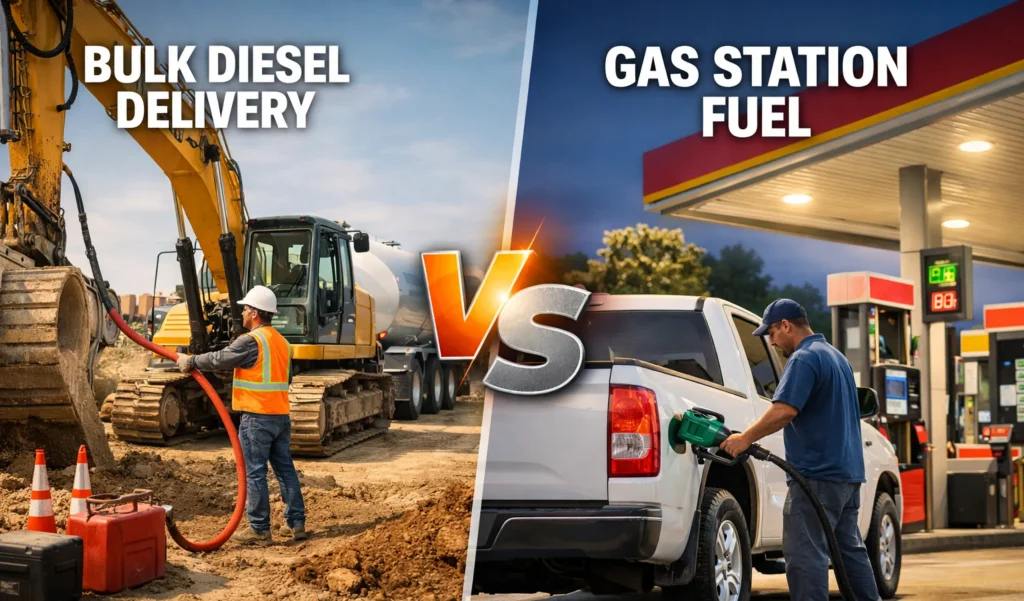
Bulk diesel delivery brings fuel directly to your construction site or facility using specialized trucks. Gas station fuel requires your drivers to detour to retail fuel stations to fill up. For commercial fleets, a bulk fuel delivery service reduces vehicle maintenance costs, eliminates fuel theft, and saves thousands of wasted labor hours every year. Fleet managers constantly look for ways to cut costs and improve efficiency. Choosing the right fuel supply method makes a massive difference for your bottom line. You basically have two choices. You can send your drivers to a retail gas station, or you can use bulk diesel delivery. This guide breaks down both options to help you make the best choice for your commercial operations. Key Takeaways On-site fuel delivery cuts down non-productive labor hours. A bulk fuel program offers wholesale pricing over retail gas station rates. On-site tanks give fleet managers better control over fuel quality. Mobile fueling services keep construction equipment running smoothly. Who This Is For This guide helps construction companies managing off-road diesel equipment. It also helps commercial fleets with strict routing schedules, and fleet managers looking to reduce fuel costs and improve trucking logistics. Two Commercial Fueling Approaches Traditional gas station refueling requires drivers to find a local fueling station. They must wait in line, pump the fuel, and process payments using fuel cards. This method works well for small businesses with one or two vehicles. Bulk diesel delivery brings the fuel directly to your commercial fleets. Bobtail trucks pump dyed off-road diesel or undyed on-road diesel directly into your heavy machinery or Fuel Cube storage tanks. This method eliminates travel time completely. The True Cost of Fueling A gallon of diesel at a convenience store might look cheap on the sign. However, the price per gallon does not reflect your true costs. When drivers stop at a retail gas station, they spend an average of 20 minutes off their route. You pay them for that time. You also pay for the fuel they burn driving off-route. Over a year, this non-productive time costs construction companies thousands of dollars per employee. On-site fuel delivery removes this labor waste. Your team starts their shift with full tanks. Streamlining Fleet Operations Efficiency drives profitability in the construction industry. Relying on fuel stations takes away your control over daily logistics. Traffic jams and crowded pumps delay your projects. Bulk fuel delivery puts you in control. You schedule fuel delivery services during off-hours or overnight shifts. Your equipment stays on the job site. This mobile fuel delivery approach ensures your projects stay on schedule. Reliability and Fuel Management Fuel quality matters for modern diesel engines. Poor fuel causes engine deposits and increases vehicle maintenance costs. When you use public pumps, you cannot guarantee the fuel quality. Setting up an on-site tank allows you to monitor exactly what goes into your equipment. Providers like Ricochet Fuel Distributors or Mirabito Energy Products offer fuel management systems. These systems track fuel levels and prevent fuel theft. You always know exactly how much fuel your fleet consumes. Beyond Diesel: Integrated Solutions Modern fuel suppliers offer more than just on-road and off-road DSL. They provide comprehensive fleet services. You can order diesel exhaust fluid alongside your regular highway diesel fuel delivery. Suppliers also deliver industrial lubricants, gear oils, and hydraulic oils. Bundling vehicle lubricants with your fuel delivery plan simplifies your vendor management. Ideal Industries for Bulk Fuel Construction companies benefit the most from mobile fueling services. They operate heavy equipment that cannot easily drive to a corner gas station. Other ideal candidates include data centers requiring emergency fuel delivery for generators. Logistics and trucking companies also use on-site fueling to maintain strict delivery schedules. Making the Strategic Shift Switching to a bulk fuel program requires planning. First, evaluate your current fleet size and fuel economy. Calculate how many gallons you use monthly. Next, check local fuel storage guidelines for underground storage tanks or above-ground cubes. Finally, contact regional suppliers like Sunoco LP, Jacobus Energy, or Walthall Oil Company to negotiate wholesale pricing. Common Mistakes Ignoring hidden labor costs: Managers often look only at the pump price and forget about paid driver downtime. Buying the wrong tank size: Underestimating your fuel usage leads to emergency deliveries and extra fees. Skipping fuel management software: Failing to track usage allows fuel theft to go unnoticed. Pros and Cons of Fueling Methods Gas Station Fuel Pros: No upfront equipment costs. Easy access for small, local routes. Drivers can buy food or use restrooms. Cons: Higher retail pricing. Massive loss of productive labor time. High risk of credit card skimming and fuel theft. Bulk Diesel Delivery Pros: Lower wholesale pricing options. Eliminates off-route driving and wasted wages. Detailed tracking prevents unauthorized fuel use. Cons: Requires space for an on-site tank. Requires compliance with local environmental regulations. Minimum delivery volumes apply. Comparison Table Feature Gas Station Fuel Bulk Diesel Delivery Pricing Retail price Wholesale pricing Labor Time High wasted time Zero wasted time Fuel Tracking Manual receipts or fuel cards Automated fuel management systems Equipment Need None On-site tank or mobile fueling schedule Best For Very small fleets (1-3 vehicles) Construction companies and large fleets Fueling Your Business for Future Success Managing a profitable construction company requires smart logistics. Relying on retail pumps wastes your most valuable resource, which is time. Switching to bulk diesel delivery streamlines your operations, secures your supply chain, and protects your bottom line. Take the time to evaluate your fleet usage today and start planning your transition to on-site fueling. Frequently Asked Questions