
Emergency Diesel Fuel Delivery: Operations Guidelines 2026
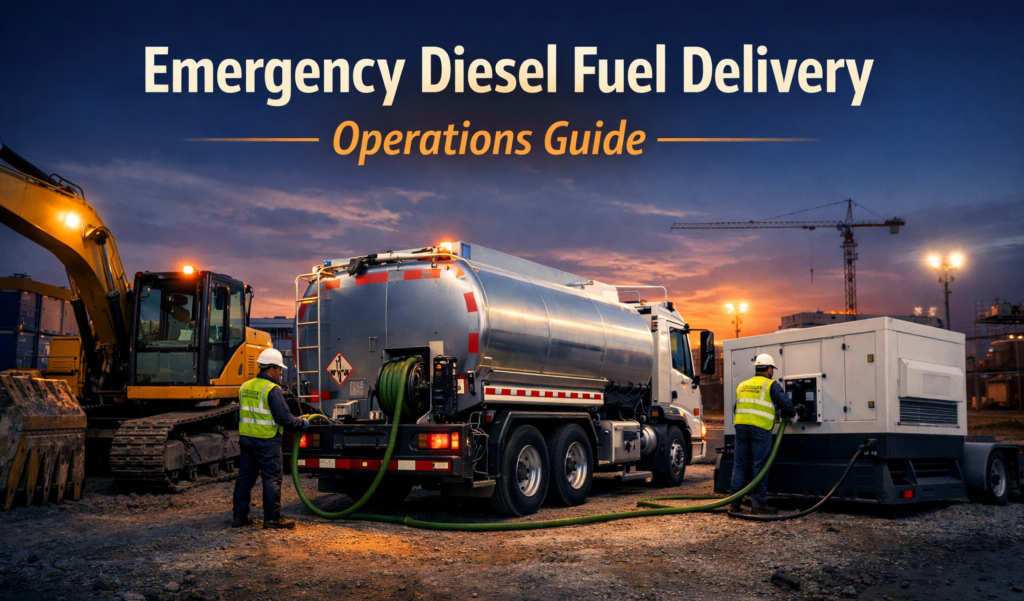
Fuel emergencies cost more than fuel. They stop trucks, idle crews, delay schedules, and put pressure on operations teams to solve the problem fast. Emergency diesel fuel delivery gives businesses a practical way to restore equipment, fleet, and generator uptime without sending staff off-site to chase fuel. For most operators, the value is simple. You reduce downtime, avoid labor waste, and get fuel delivered where the asset sits. That matters for construction sites, fleet yards, warehouses, cold storage, backup power systems, and industrial facilities that cannot afford a long outage. What counts as a fuel emergency? A fuel emergency happens when operations cannot continue without immediate on-site refueling. The issue may affect one asset or an entire site. Common examples include: A standby generator runs low during a power outage A jobsite runs out of fuel before the next scheduled drop Yard trucks or fleet vehicles cannot start the next shift Equipment gets stranded at a remote site A supplier delay disrupts planned fuel replenishment Severe weather or traffic causes an unexpected fuel gap In each case, the problem is not only fuel supply. It is lost uptime, missed deadlines, and operational risk. When emergency delivery makes sense Not every low-fuel event requires urgent service. This option makes the most sense when the cost of waiting is higher than the cost of rapid response. Best fit for this option Emergency response usually makes sense for: Fleets with fixed dispatch windows Construction crews on active jobsites Generator-dependent facilities Industrial sites with critical equipment Yards that need overnight or early-morning fueling Operations with limited in-house fuel storage It also fits businesses that already use a diesel delivery service for scheduled support but need backup coverage when plans change. What a strong provider should handle Fast delivery matters, but speed alone does not solve the problem. A useful emergency fueling response needs structure. 1. Clear dispatch communication The provider should confirm: Fuel type Approximate gallons needed Asset or tank location Site contact Access limits Urgency level This reduces misroutes and wasted time. 2. On-site fueling capability Mobile fueling should work where the asset sits. That includes fleet yards, roadside locations, construction sites, and facility generator pads. This is where mobile diesel delivery supports operations better than sending staff to fill portable containers. 3. Safe fueling procedures Emergency work still requires safe handling. Operators should follow fueling protocols, use proper equipment, and document delivery details. Safety matters even more at active jobsites or crowded yards. 4. DEF coordination when needed Some fleets and equipment need more than diesel. If diesel arrives but DEF does not, the problem may continue. Many operators benefit when emergency service can align with DEF needs instead of treating them as separate events. Response priorities by use case Use Case Main Risk Response Priority Why It Matters Fleet yard Missed dispatch Fast fueling before shift start Protects route schedules and driver productivity Construction site Crew downtime On-site equipment refueling Keeps machines and labor working Generator support Power loss Immediate tank replenishment Protects uptime, safety, and facility continuity Remote equipment Access delays Mobile access planning Reduces stranded asset time Industrial facility Production disruption Verified fuel type and access Avoids process interruption and restart issues Pros and cons Pros Reduces costly downtime Keeps labor focused on operations Supports equipment and fleet uptime Helps maintain schedules during supply disruptions Improves convenience at jobsites and yards Cons Urgent service can cost more than planned fueling Poor site details can delay response One-off emergency calls do not replace fuel planning Limited access sites may slow delivery Common mistakes to avoid Waiting too long to call Many teams wait until a tank is nearly empty. That leaves little room for traffic, access issues, or verification. Call early when the risk becomes clear. Giving incomplete site information Bad directions, missing gate codes, or unclear tank location can waste critical time. Share exact access details and a live contact. Focusing only on diesel volume Think beyond gallons. Consider equipment count, generator runtime, next shift needs, and whether DEF delivery or follow-up support is also required. Treating emergencies as isolated events A single fuel shortage often reveals a planning gap. It may point to poor tank monitoring, weak reorder timing, or no backup support for high-demand periods. How to reduce future emergency calls The best emergency plan combines fast response with better fuel logistics. Businesses that run multiple assets or extended-hour operations often benefit from a layered approach. Build a practical fueling plan A stronger plan may include: Scheduled replenishment for high-use locations Fuel level monitoring on critical tanks Yard-based fueling before shift start Backup support for storms, outages, or peak demand Combined diesel and DEF planning for mixed fleets Jobsite reviews for long-term project support This is where fleet fueling services, generator fueling, and longer project-based fueling support can reduce avoidable disruptions. Operational questions buyers should ask Before choosing a provider for urgent fueling needs, operations teams should ask practical questions. Can they reach our sites? Coverage matters. So do access conditions, after-hours rules, and jobsite realities. Can they fuel different asset types? Some businesses need support for trucks, heavy equipment, reefer units, generators, and yard assets in the same service window. Can they support both urgent and routine work? Emergency response works better when it connects with broader fuel logistics. Many operators prefer one partner that can support urgent calls, recurring route work, DEF delivery, and project fueling. Can they document deliveries clearly? Clear records help with internal controls, job costing, and compliance. Good documentation also supports fuel reconciliation after a disruption. Why this matters for uptime Fuel problems spread fast. One empty tank can affect route timing, labor efficiency, customer service, and equipment availability. That is why emergency diesel fuel delivery matters most in operations where downtime creates immediate business impact. Used well, it is not just a rescue option. It is part of a broader uptime strategy that supports continuity when conditions change faster than the fueling schedule. Key Takeaways Fuel emergencies affect uptime,